
A VISIT TO AVON AND FONTAINEBLEAU
- 9 January 2026
Katherine Mansfield House & Garden Director Cherie Jacobson shares her experience of visiting the places where Mansfield spent the last few months of her life and was laid to rest.
In 2025 I was fortunate enough to receive a Churchill Fellowship. This enabled me to spend a month on a self-directed study tour of historic house museums in England and Ireland. I posted about each of the houses on the Katherine Mansfield House & Garden Facebook and Instagram if you’d like to see which ones I visited, the first post was published on 28 May 2025. I then took the opportunity for a holiday, which included time in France. Having never visited Katherine Mansfield’s grave before, I included three nights in Fontainebleau in my plans so that I could see first-hand places from the final chapter of her life.
Mr Mansfield
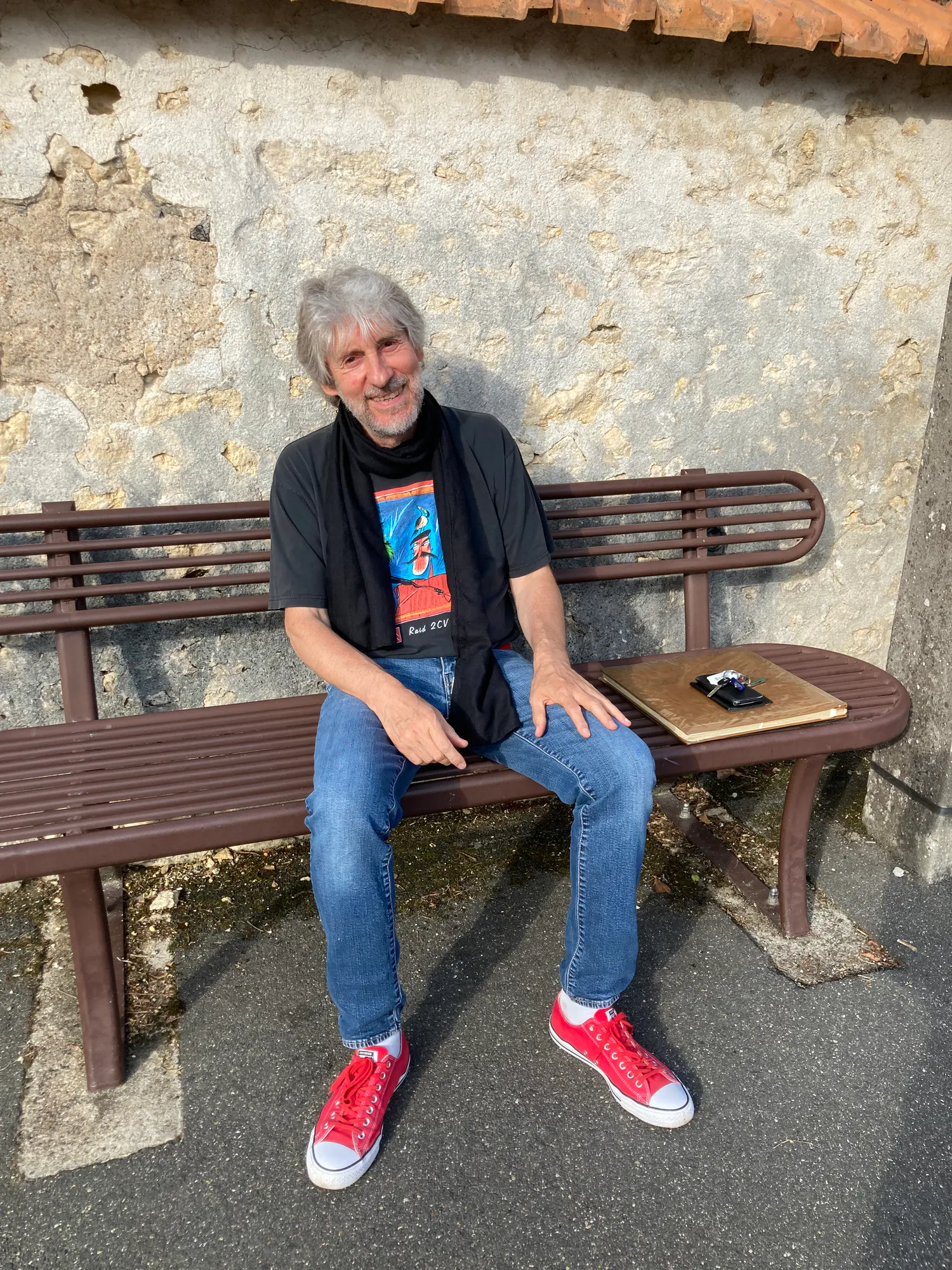
I was first introduced to Bernard Bosque through Redmer Yska’s wonderful book Katherine Mansfield’s Europe: Station to Station, published in 2023, the centenary year of Mansfield’s death. I like to think of Bernard as ‘Mr Mansfield’ because of his in-depth knowledge of Mansfield in France and his dedication to honouring her memory by caring for her grave and organising an annual gathering around the time of her birthday in October. When I knew I would be visiting Fontainebleau, I reached out to Bernard, who was incredibly generous with his time and organised for me to visit some of the key sites in both Fontainebleau and Avon.
Why was Mansfield in Avon?
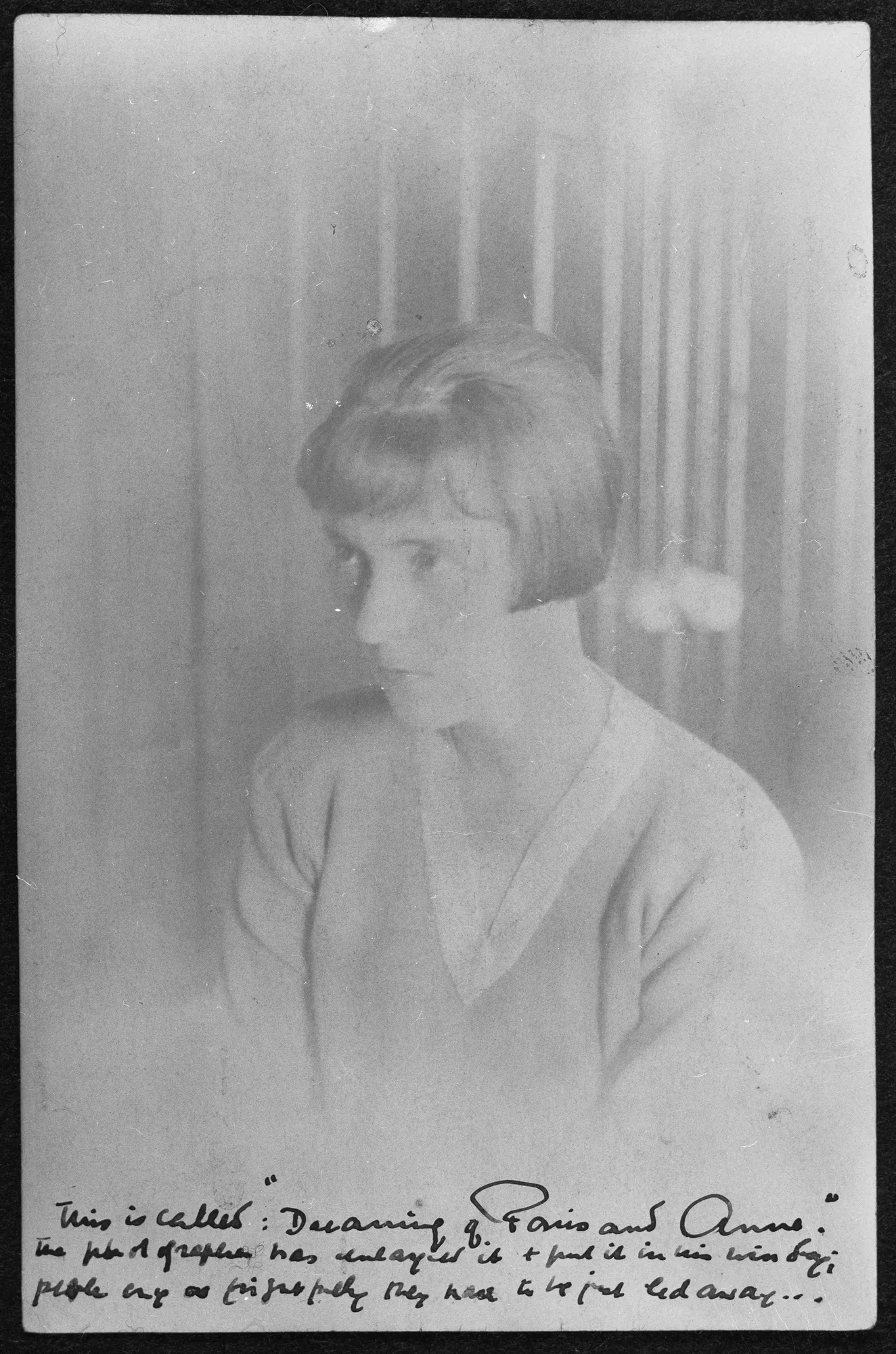
For anyone not so familiar with Mansfield’s life, this Dictionary of New Zealand Biography entry by Gillian Boddy (now Gillian Greer, a treasured friend of Katherine Mansfield House & Garden) gives an excellent overview. By 1922, around the time the photo above (from the collection of the Alexander Turnbull Library) was taken, Mansfield was seriously ill with tuberculosis. She had tried spending time in warm climates such as the south of France, and in high mountain air in Switzerland. She had also undergone a new painful X-ray treatment in Paris which did not provide the miracle cure she hoped for. As Gill explains:
“Influenced by mystical thinkers such as P. D. Ouspensky, she was now convinced that in order to recover her health and fulfil her ambitions she must try to cure the soul, not the body. She was determined to write stories that were free of cynicism, to lead a new kind of life, to become 'a child of the sun'. In October she entered G. I. Gurdjieff's 'Institute for the Harmonious Development of Man' at Avon-Fontainebleau near Paris. Her last letters to her family, [her friend Ida Baker known as LM] and [her husband John Middleton Murry] show that in that community she at last found something of the resolution she sought. Murry visited her on 9 January 1923. That evening she suffered a fatal haemorrhage. She was buried at Avon-Fontainebleau after a service conducted in French in the small Protestant church.”
Despite having looked at Avon and Fontainebleau on Google Maps many times, it wasn’t until I visited that I properly understood the geography of the two towns. The train station that my partner Alex and I arrived into from Paris is called Avon-Fontainebleau, but it's actually within the boundaries of Avon, which is definitely a separate town to Fontainebleau, although they have grown towards each other over time. Fontainebleau has a huge palace, the Château de Fontainebleau, which was used as a hunting lodge and autumn residence for many of the French monarchs, including Napoleon I. Fontainebleau shares its name with the large forest that surrounds both towns (more on the forest later...). The two towns have their own local council or ‘mairie’, but they are so close you can stand on one street and see an entry sign for Fontainebleau on one side and an entry sign for Avon on the other!
Le Prieuré
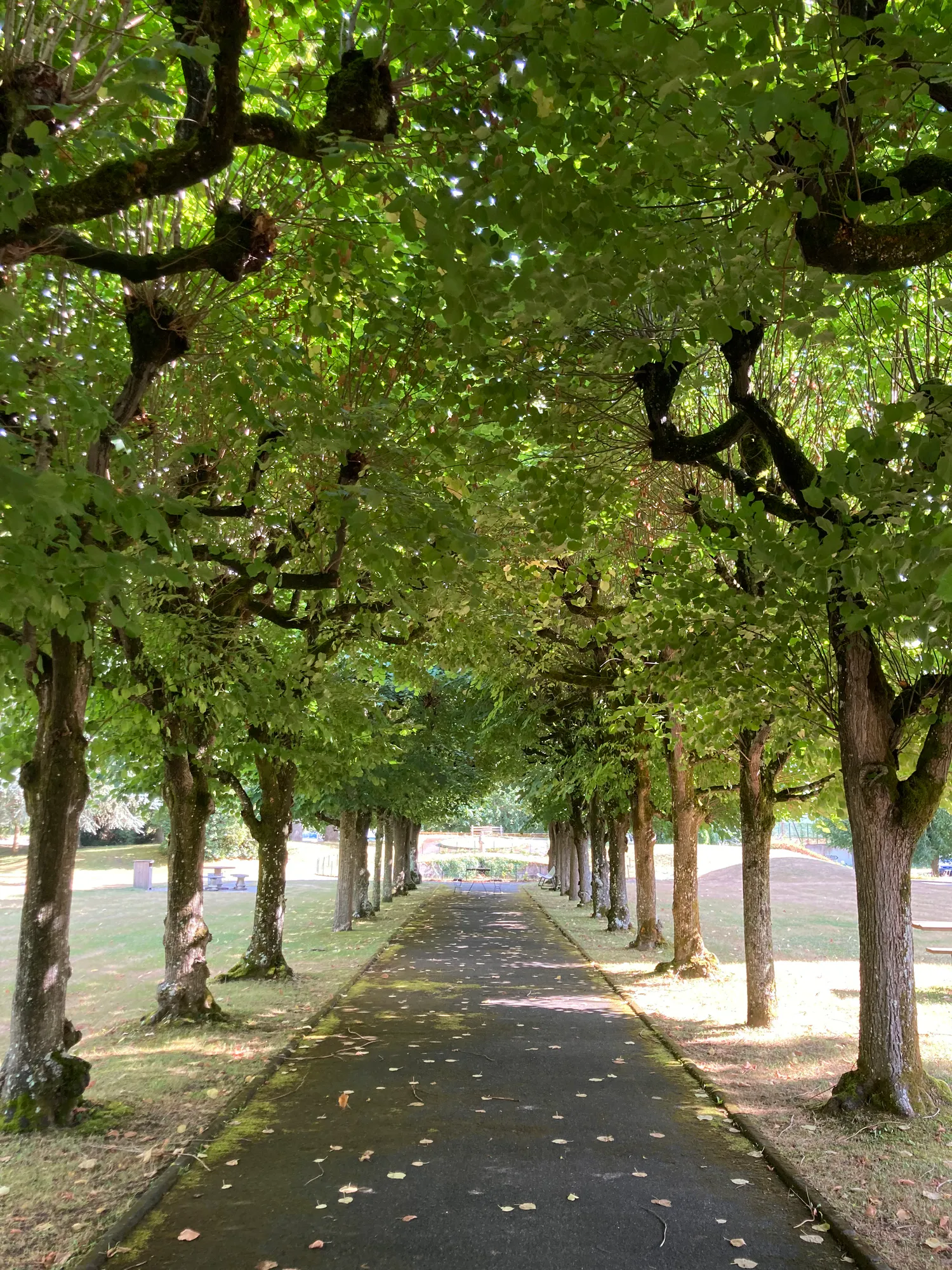
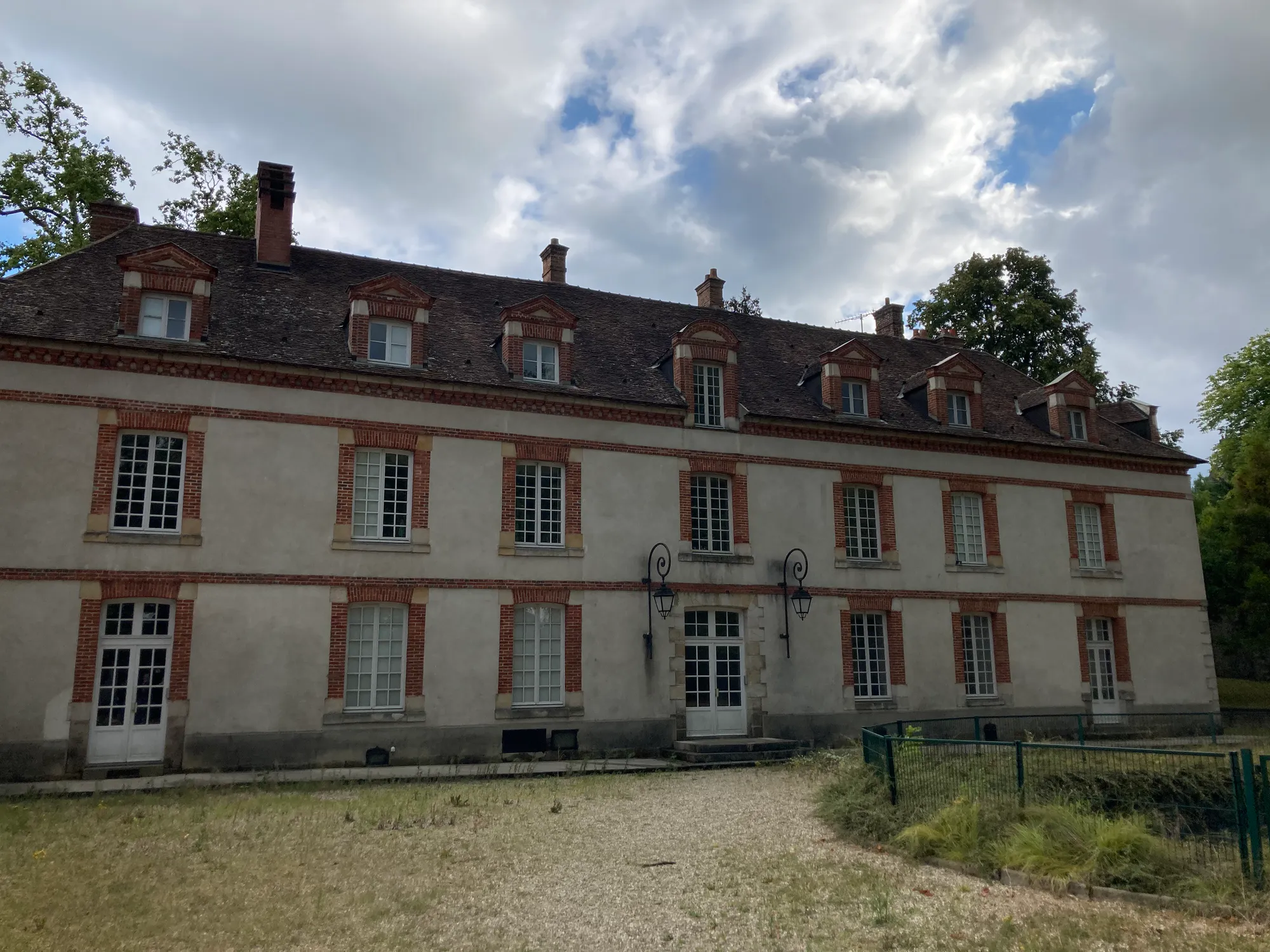
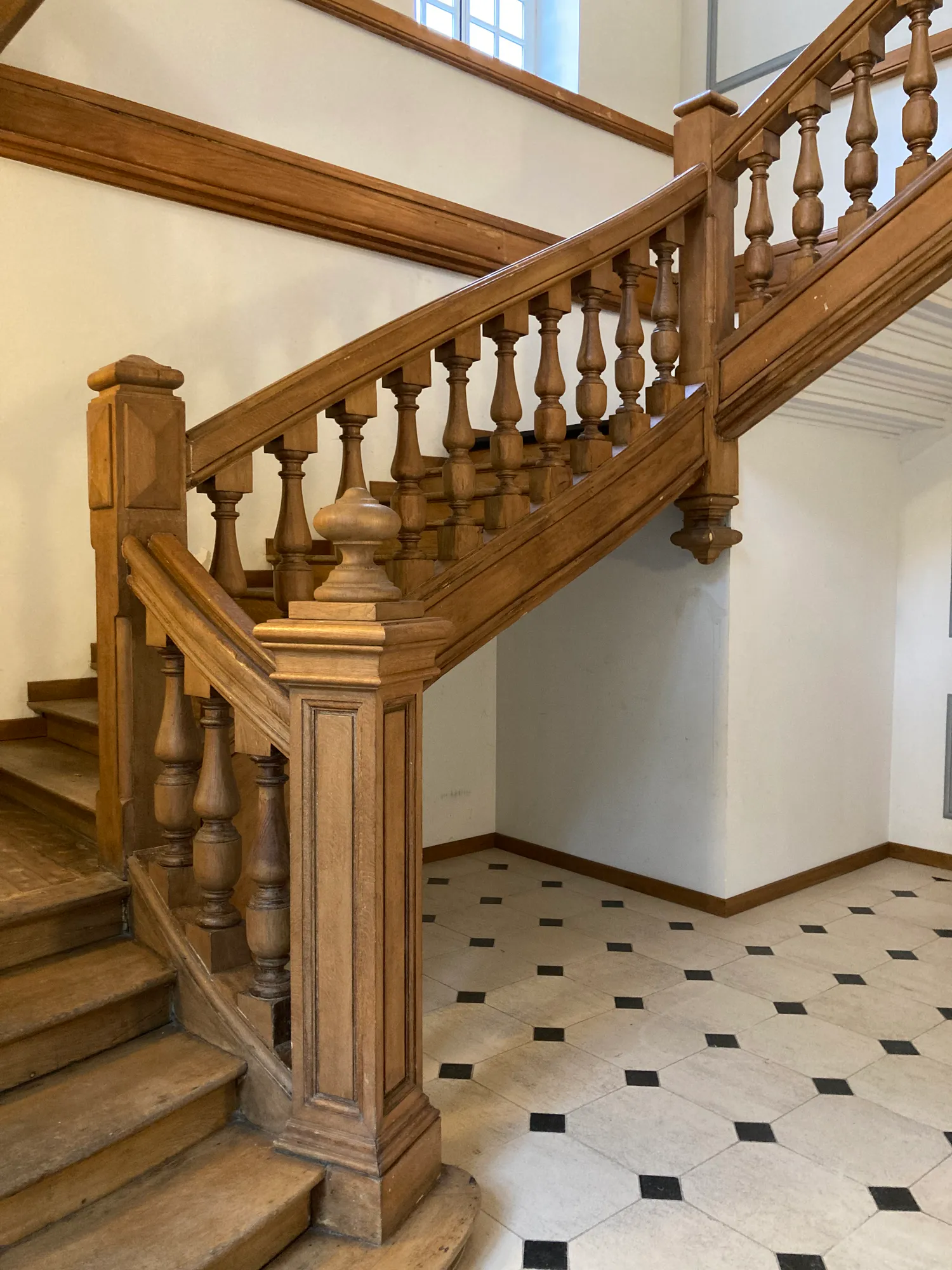
The first site I visited with Bernard was the Prieuré des Basses Loges in Avon, originally a priory (hence the name) and now private apartments. In 1922 it was where Gurdjieff set up his Institute for the Harmonious Development of Man and where Mansfield stayed from 16 October 1922 until her death on 9 January 1923.
We walked in the garden which has been reduced in size since Mansfield’s time and is looking a little worse for wear; for example, the decorative ponds no longer have water in them and the front courtyard was peppered with weeds. But the avenue of trees leading from the rear of the building remains and the exterior is preserved so that it looks much as it did in 1922.
The sky had darkened and it was beginning to rain as Bernard punched in the code for the front door – only to be met with the descending notes that signal entry failure. After a couple more attempts as fatter raindrops fell, entry was granted and we were standing at the bottom of the main staircase. Mansfield had rushed up these stairs on the evening of 9 January 1923; the exertion brought on the haemorrhage in her lungs that killed her aged just 34.
It struck me as we walked up the stairs that I spend most days walking up and down the very first stairs she knew at the house she was born in, and now I was walking up the last stairs she ever climbed.
As the Prieuré is now private apartments, the rest of the interior of the building is nothing like it would have been in Mansfield's time, so there wasn’t anything else to see. Just to note that apart from the photo of Mansfield, all the photos in this blog post were quickly snapped on my phone. You can click on them to view them at full size. Redmer’s book has much better photos and I really do recommend reading it as not only does it give great insights into Mansfield's travels in Europe, it also has a helpful map of Mansfield sites in Avon and Fontainebleau specifically.
La Rue Katherine Mansfield, le Parc de Bel-Ébat and la Cimetière d’Avon
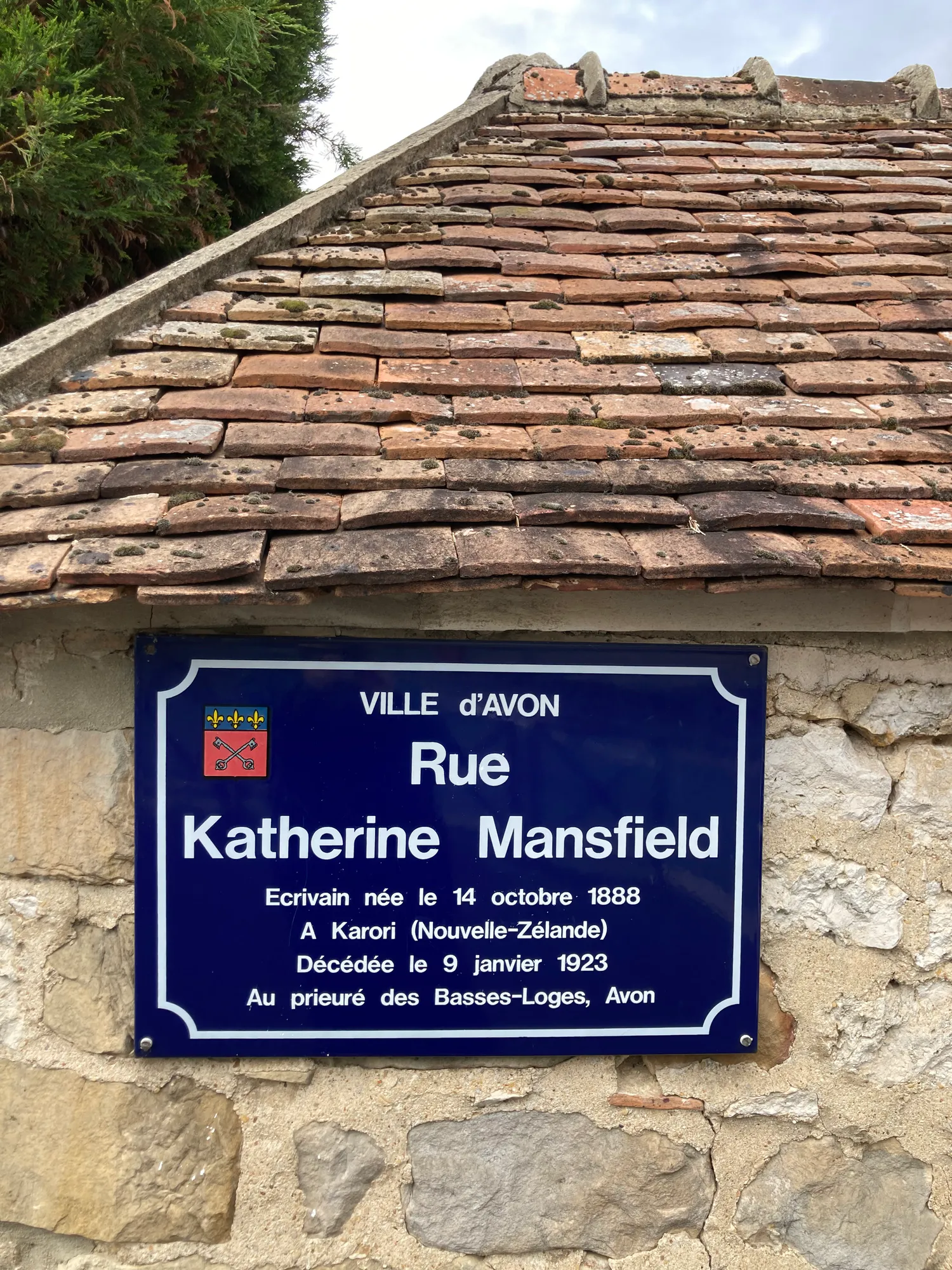

Bernard and I then stopped at Rue Katherine Mansfield and a biography of Mansfield on the fence of Parc de Bel-Ébat as part of a series about notable people of Avon.
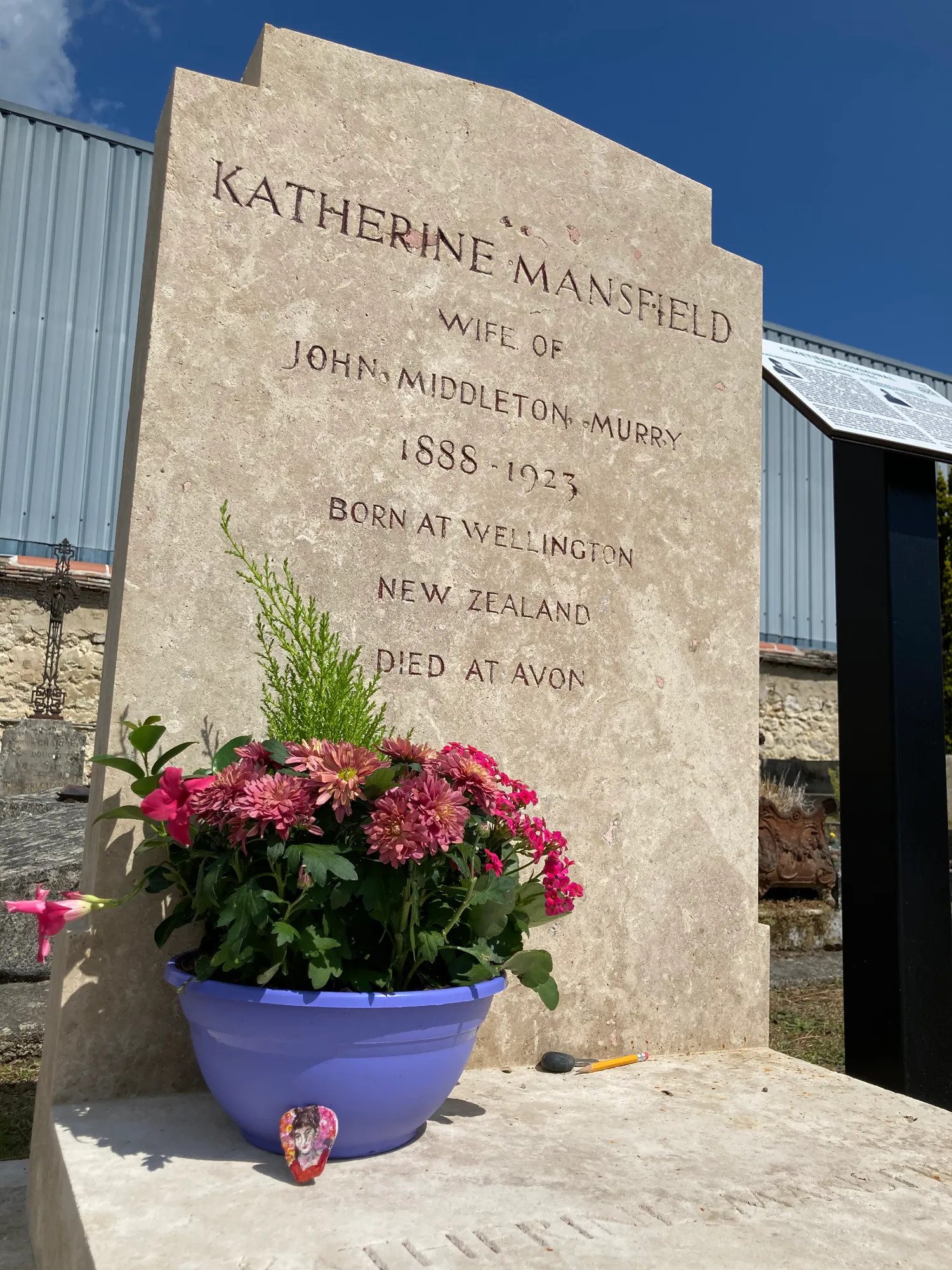
Our final stop that evening was Mansfield’s grave at the Cimetière d’Avon, which I returned to with flowers the next day. You can watch a short video of me at the grave which shows its surrounds. The cemetery is very well maintained and right next to the railway line - given Mansfield's fondness for train travel, this seems quite appropriate.
La Forêt de Fontainebleau

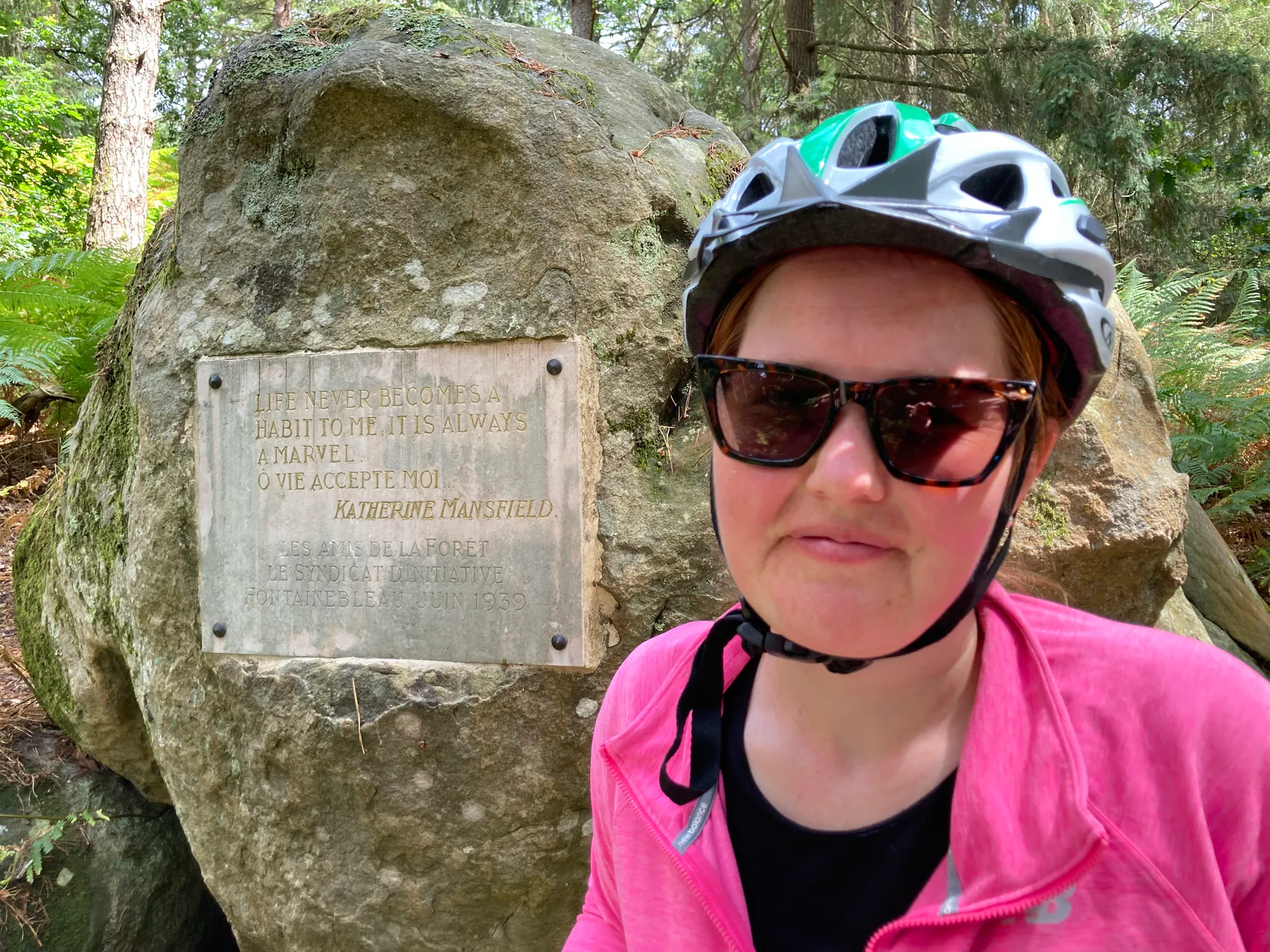
Alex and I had hired bikes with the plan to visit Mansfield’s grave to leave flowers, then head to a large rock in the Fontainebleau Forest bearing a commemorative plaque dedicated to Mansfield. We would then carry on to a small town named Barbizon on the other side of the forest for lunch. Barbizon is known as a painters’ village as in the 1800s it hosted or was home to many painters, including Edouard Manet, Edgar Degas and Jean-François Millet. We had a map from the tourist information centre but it wasn’t very detailed, so we used Google Maps to find the commemorative rock.
It wasn’t an easy ride on the mountain bikes we had been given, but we made it to the rock and although it was a hot day in July, it wasn’t too bad in the forest (despite my very pink appearance in the photo above!). Given Google Maps had worked so far, we followed its instructions to head to Barbizon, which it said was about 25 minutes away.
We then got lost. Very lost. I’m going to hazard a guess and say there are hundreds of little paths in that forest and Google Maps treated them all the same, but actually some were overgrown and ultimately impassable, while others were in areas with restricted access to protect the plants. Going to the rock had taken us off a main path and the hard-copy map wasn’t detailed enough to help us find our way back to one. We lost phone reception and didn’t come across anyone else to help set us right. Eventually I heard some traffic and we followed the sound to a main road, but it had trucks travelling at speed so was not a good route for cyclists. We had well and truly given up on making it to Barbizon, despite being very hungry having eaten our muesli bars ages ago! Our focus was on finding our way back to Fontainebleau, especially given Bernard had arranged for us to meet the Mayor of Avon that evening.
Phone reception returned by the main road, so Alex managed to figure out how to get to a main path based on the location of the road. I initially refused to go back into the forest given how lost we’d just been, but biking along next to trucks going 80km/h was equally unappealing, so back into the forest we went.
Once we got onto a main path we saw how off the beaten track we’d been – the main paths were sealed and had lots of other cyclists and walkers. Moral of the story – if you’re visiting Fontainebleau Forest be very careful and don’t rely on Google Maps. If you want to visit the Mansfield commemorative rock and find your way out again, you might need some local help!
Le temple and la Hotel de Ville d'Avon
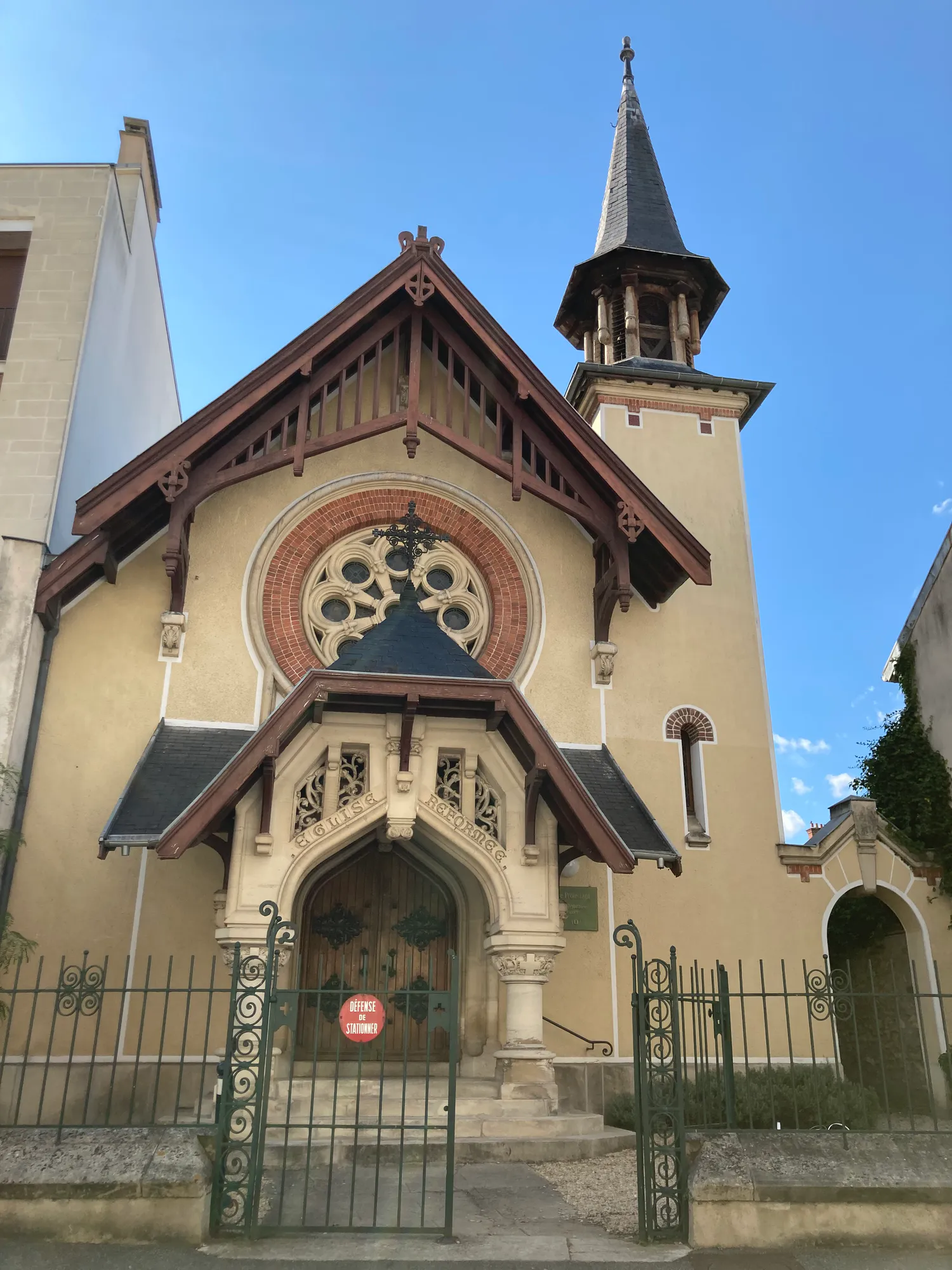
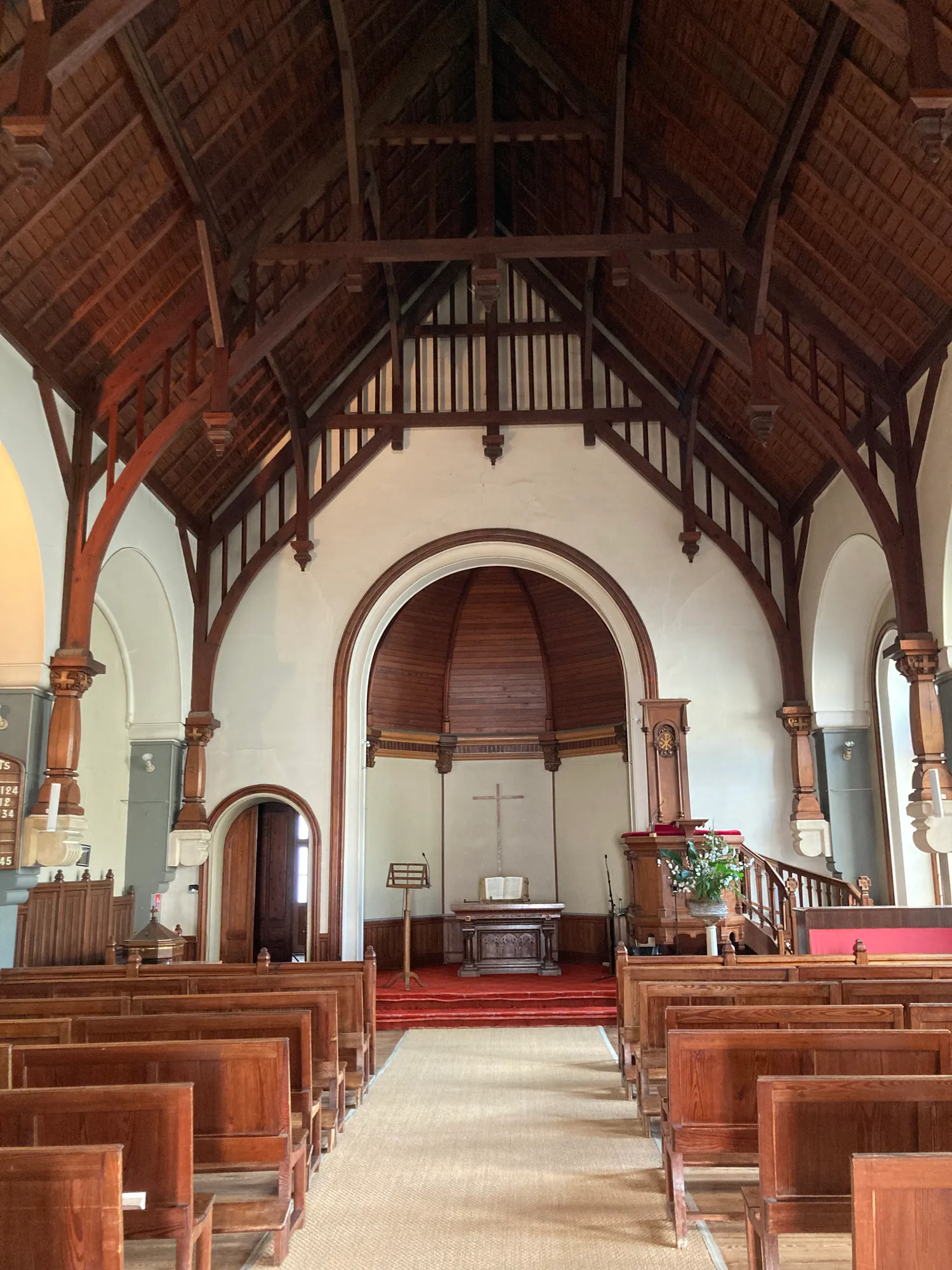
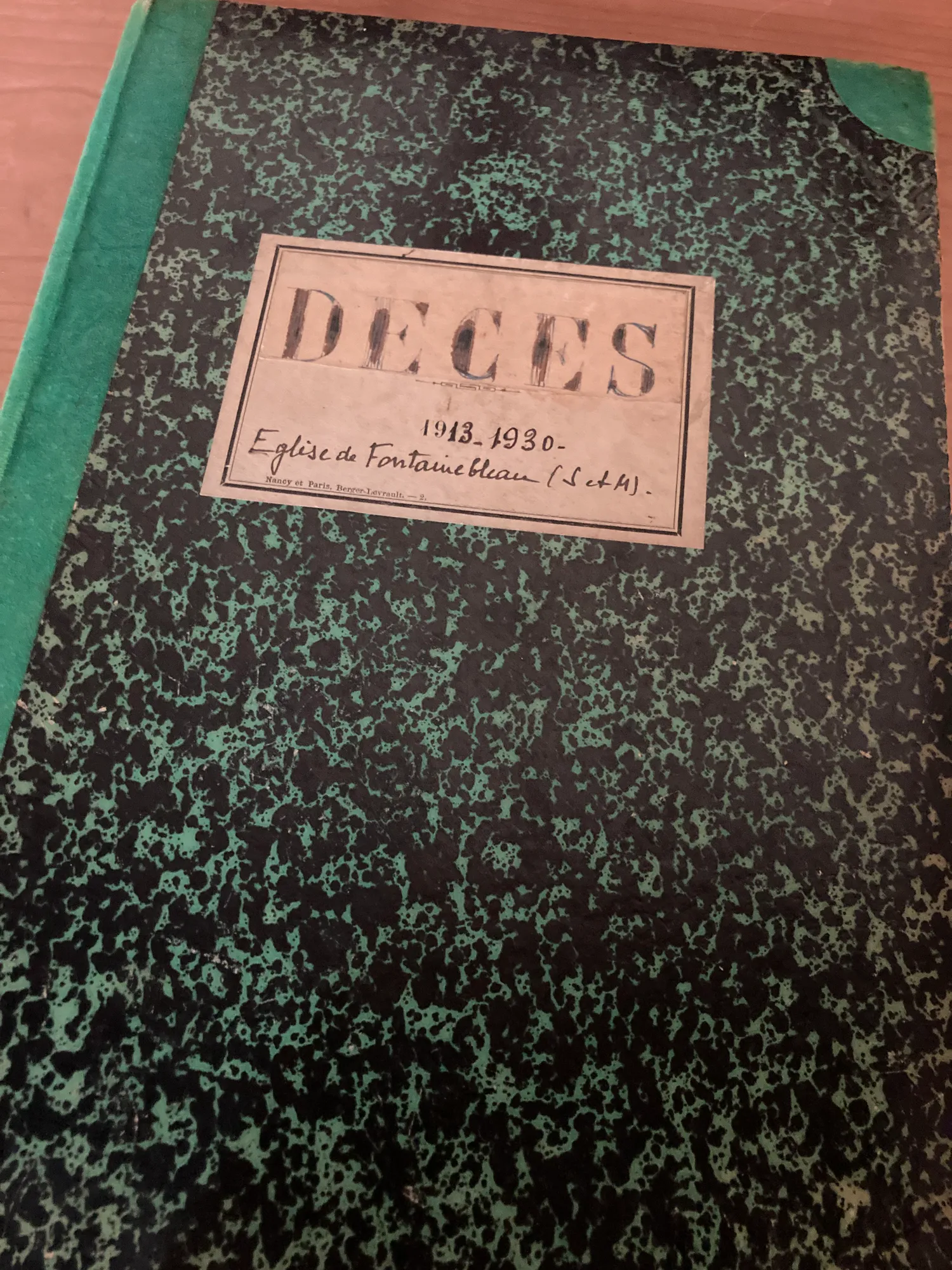
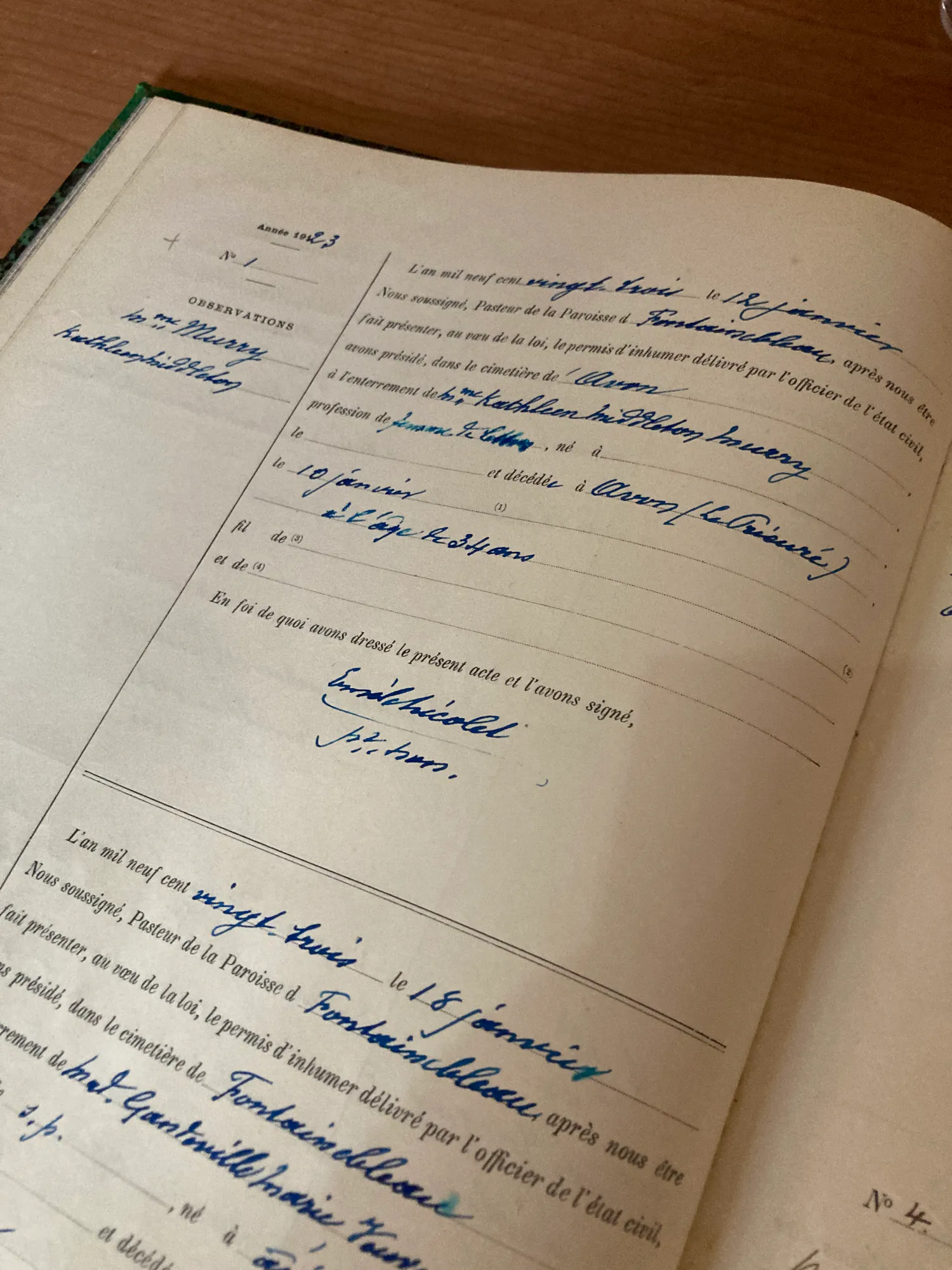
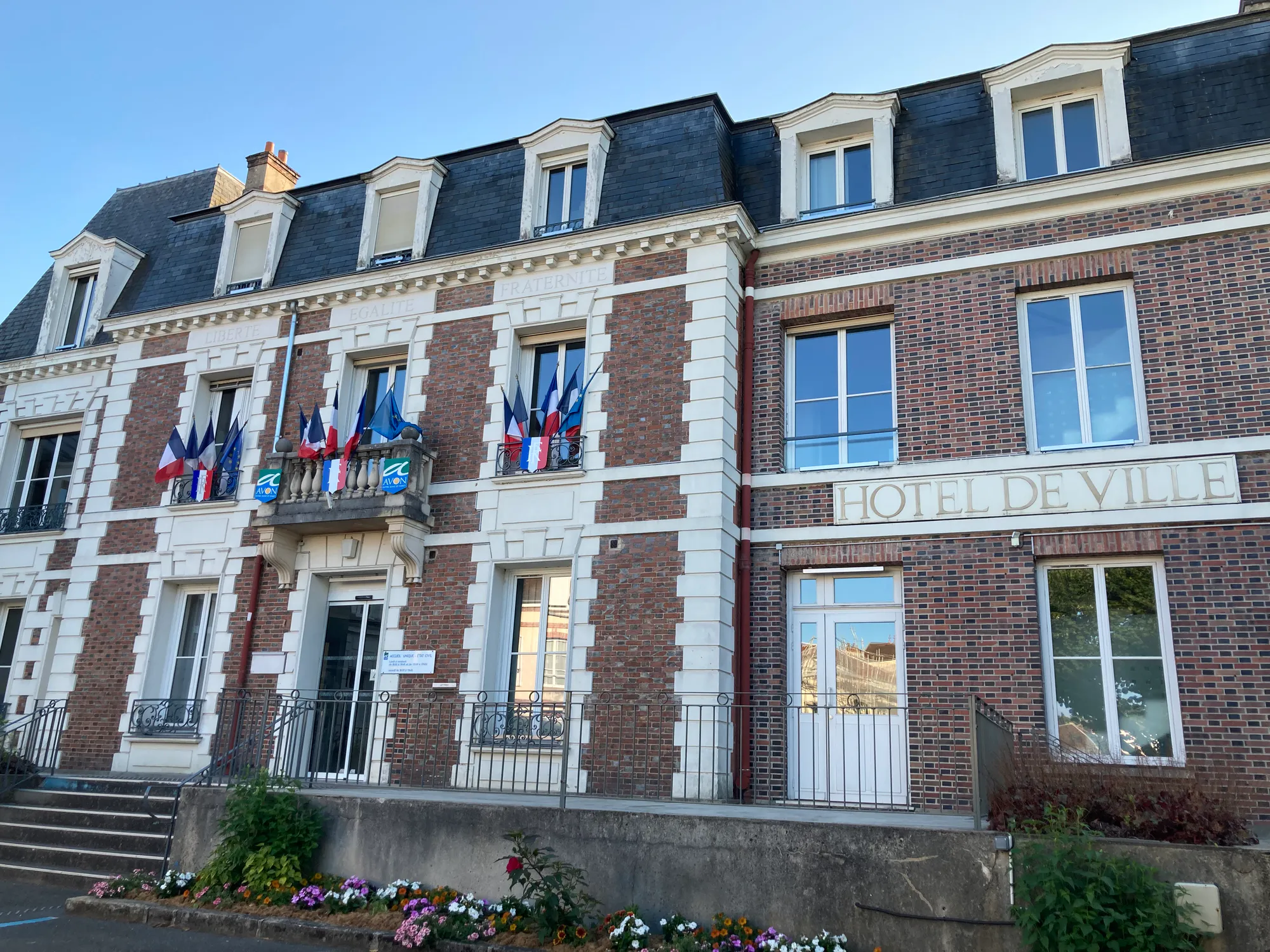
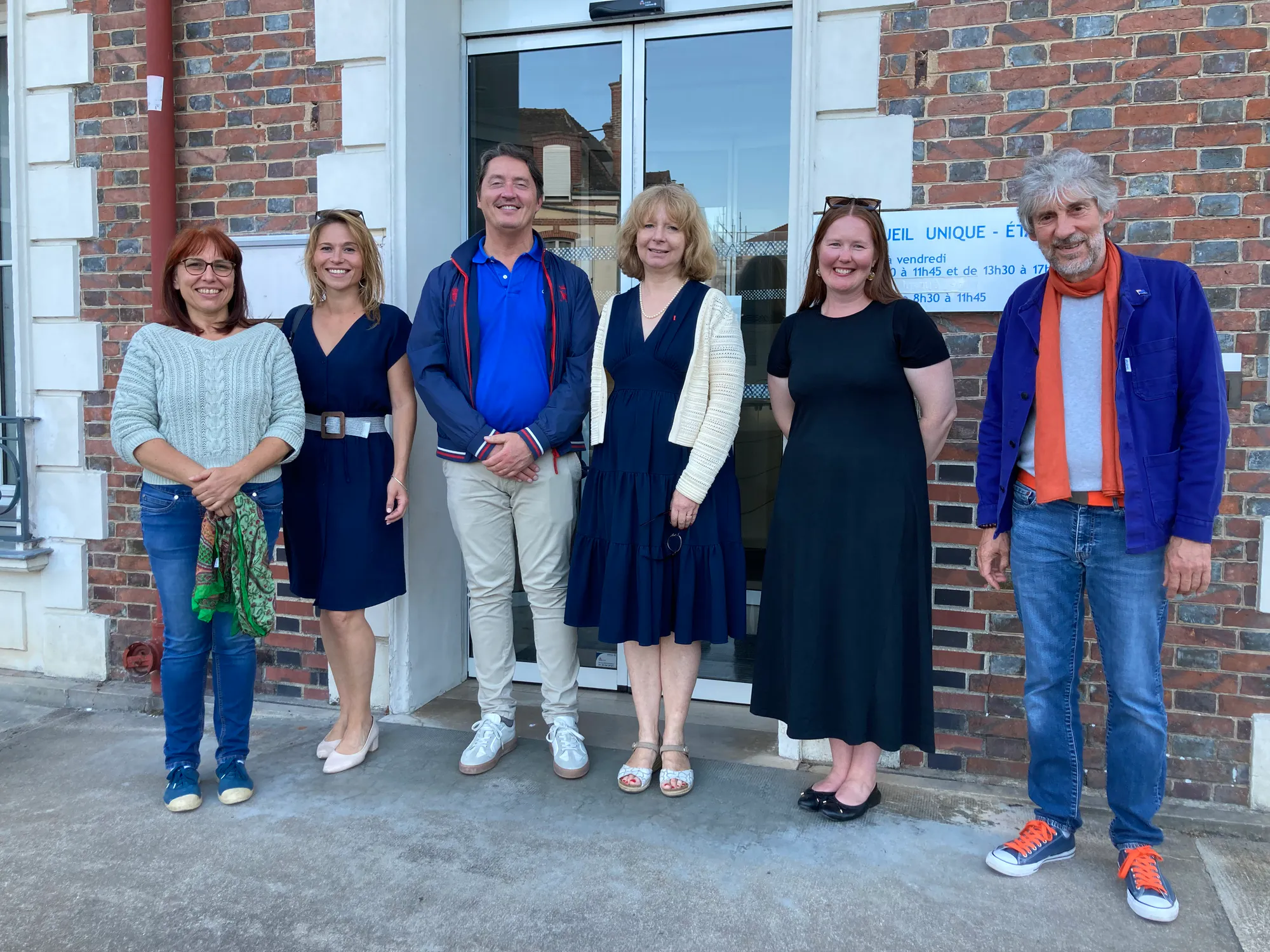
Luckily we returned our bikes and got back to our accommodation in time for something to eat and a quick shower, so we were ready to be collected by Bernard. He had arranged a visit to the church in Fontainebleau in which Mansfield’s funeral was held. On entering the church, I was struck by its wooden ceiling, as opposed to the many stone churches and cathedrals I’d visited elsewhere in France. It reminded me of the beautiful interior of Old St Paul’s in Wellington, the church in which Mansfield’s parents Harold and Annie were married and where Mansfield attended services herself. Someone was practicing on the organ and the church attendant, who had kindly opened up the church especially for our visit, got out the book of deaths and found the page recording Mansfield’s. Although the entry records the date of death incorrectly (as the 10th of January rather than the 9th), it does record Mansfield's profession as a writer ('femme de lettres').
It's a reasonable distance from the former priory in Avon where Mansfield died, to the church in Fontainebleau where her funeral was held, and then the cemetery back in Avon where she is buried. When I asked why this particular church given it’s in Fontainebleau not Avon, Bernard explained that it’s the local Protestant church (‘le temple protestant de Fontainebleau’), rather than a Catholic one. In her memoir, Mansfield’s friend Ida Baker (also known as LM) recalled that the funeral procession was going so slowly from the church to the cemetery that she got out and walked.
Our time with Bernard ended with a visit to the Mairie d’Avon to meet Mayor Marie-Charlotte Nouhaud and Councillor Sylvain Piesset, who holds the culture and heritage portfolio. It was lovely to share an apéro (evening drink) with them, along with Bernard’s wife and a local English teacher who is a Mansfield fan, and to have the opportunity to reflect on and thank the council for the way Mansfield is remembered and honoured in Avon.
Advice for visiting
Although I spent three nights in Fontainebleau, you can easily make a day trip from Paris to visit Mansfield’s grave. If you do have time for a longer visit, the Château de Fontainebleau is an impressive place and both Fontainebleau and Avon are lovely. The centre of Fontainebleau is an easy half-hour walk from the train station. It’s a popular holiday destination for Parisians, so has lots of eateries and a helpful tourist information centre.
A huge thank you to Bernard Bosque for his time, hospitality, knowledge and connections, which made our visit especially memorable, and to everyone else we met who made us so welcome.