
KATHERINE MANSFIELD'S QUEER IDENTITY
- 9 July 2026
As part of the 2026 Wellington Pride Festival, Katherine Mansfield House & Garden hosted an event called ‘Amethyst outlook’: Exploring Katherine Mansfield’s queer identity with Wellington writers Gill Greer and Joy Holley. One of the questions asked was, ‘Katherine Mansfield described herself as “a writer first and a woman after”. By this logic, she might also have described herself as a writer first and queer after. As a queer woman writer, what do you think about this perspective that the identity of ‘writer’ is the most important one?’ We asked Joy to write a piece for us expanding on her answer.
Content warning: this blog post references outdated views of sexuality that dominated the society Katherine Mansfield lived in, such as homosexuality as a mental illness, and the mention of suicide.
Whether I like it or not, I don’t think I can honestly say “I’m a writer first and a (queer) woman after”. My gender and sexuality inform basically everything I do, and they heavily inform my writing. Queerness and femininity have been two of the most consistent themes in my work, and I suspect they always will be.
Thankfully, I love being a queer woman! I have been very lucky to grow up in communities where queerness is celebrated, and I have felt comfortable and confident in my identity from a young age. I’m aware that even in 2026, this is a privilege that many others aren’t afforded.
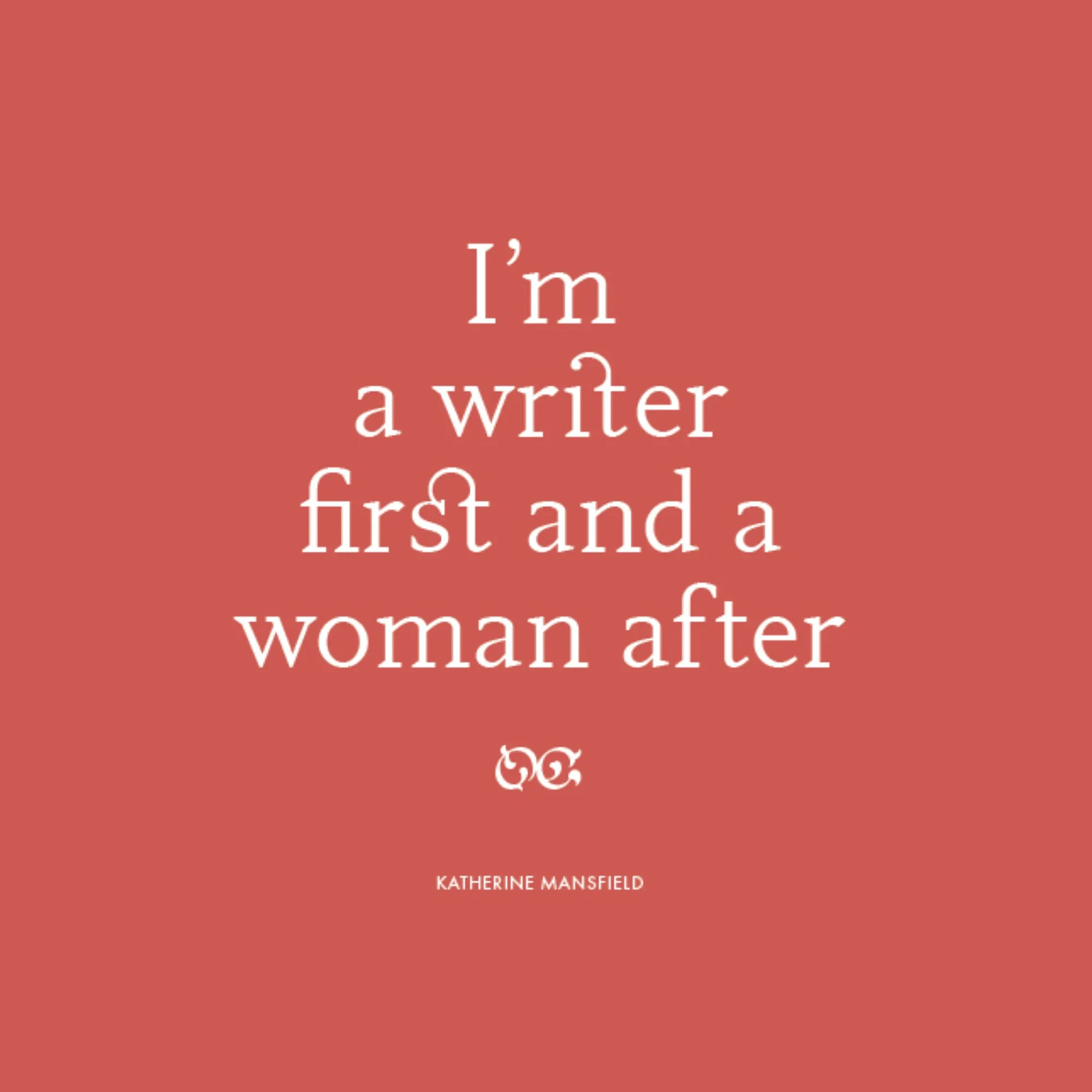
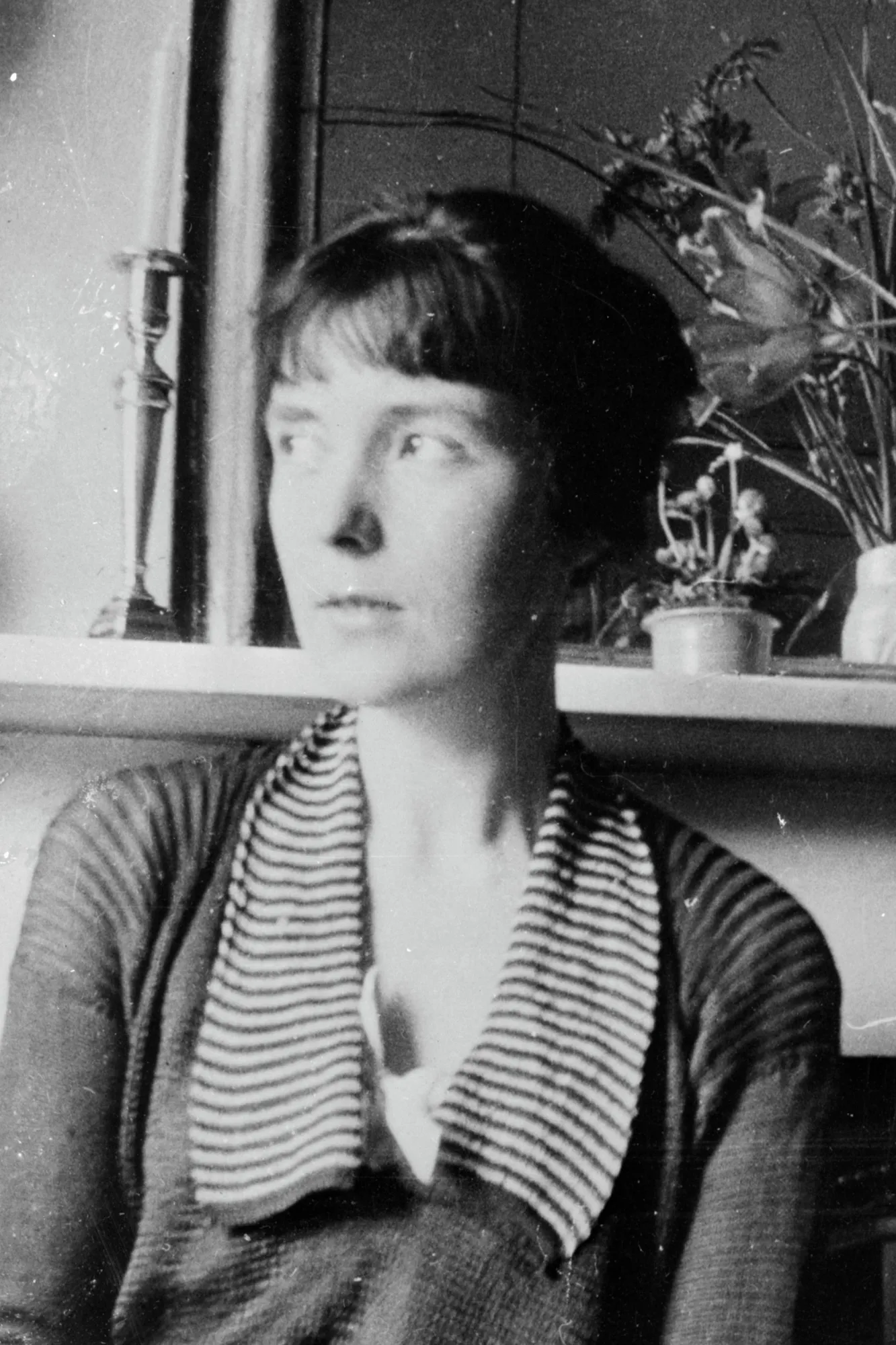
Obviously, existing as a queer woman in 1920 (the year this Katherine Mansfield quote was written, in a letter to her husband) was a different story entirely. KM grew up in a time when homosexuality was considered to be a crime, a sin, an illness. When KM writes about her sexuality in letters and journal entries, it is rarely without anguish or fear. She repeatedly equates homosexuality with “madness”, “mental decay”, and eventual suicide. “I think my mind is morally unhinged and that is the reason—I know it is a degradation so unspeakable that—one perceives the dignity in pistols” (1909).
KM’s relationship with gender was complicated too. While not as fraught as her relationship with her sexuality, she certainly felt restricted and frustrated by the limitations imposed on women in the early 20th century. When I consider what being a woman meant in 1920 (even an upper-class woman like KM) I can understand why she identified more as a writer instead. Would I identify as woman-over-writer if being a woman meant marrying a man, raising his children, and little else?
Women’s lives have changed almost unfathomably in the past hundred years. And yet, many of the comments KM makes on gender in her stories, journals and letters still feel entirely relevant today. In 1913 KM wrote to her eventual husband, John Middleton Murry, “When I have to clean up twice over or wash extra unnecessary things I get frightfully impatient and want to be working. So often, this week, I’ve heard you and Gordon talking while I washed dishes… Yes, I hate hate HATE doing these things that you accept just as all men do of their women.” I fear this is still a familiar feeling for many women in 2026!
I have always read “I’m a writer first and a woman after”, at least partially, as a rejection of KM’s gender. Maybe it was a rejection of feminine roles and expectations, or maybe it was something more than that. While we will never know for sure, I think it’s safe to assume KM felt some resistance towards her gender. In 1919, KM wrote in her journal about John Middleton Murry: "I had been the man and he had been the woman. We'd always acted more or less like men friends. Then this illness getting worse and worse and turning me into a woman." And in 1907, when describing an intimate night with Edith Kathleen Bendall at the cottage in Days Bay: “I am a child, a woman and more than half man.” And in 1921: “We are neither male nor female. We are a compound of both. I choose the male who will develop and expand the male in me; he chooses me to expand the female in him.”
Unlike “woman”, “writer” is a genderless term. Maybe this was part of the reason KM identified with it more?
Of course, the literary industry was still dominated by men at this time. It’s hard to wrap my head around what a bold, defiant statement this would have been from a woman in 1920, as it feels like a fairly inoffensive thing to say in 2026. However, “I’m a writer first and a mother after” still feels like a bold thing to say in 2026, and would definitely receive backlash from some communities. Once again… so much has changed, and so much hasn’t!
It is also worth noting that KM was a full-time writer. She came from an extremely privileged background, and never had a job outside of writing and editing. This is a very different life to that of the vast majority of authors in 2026, who usually have to work part-time, if not full-time, alongside writing. The longest period of time I have spent as a “full-time writer” was my three week residency at the Katherine Mansfield House in 2024! Even during my Masters in Creative Writing, I worked 20 hours a week.
When I was first thinking about my answer to this prompt, I felt some minor imposter syndrome. If I, unlike KM, am a woman first and a writer after, am I even a real writer? But maybe if I could write full-time, rather than squeezing it in around full-time work, I would also identify as a writer first and a woman after.
It is hard to imagine myself in KM’s shoes, just as it is hard to imagine her in mine. While we are both writers, and queer women, we are also a product of our time, and of our social class. It is impossible to untangle these identities from their historical and social context.
Sometimes I get her, though. In a letter to her cousin Sylvia Payne in 1906, KM wrote, “Would you not like to try all sorts of lives – one is so very small – but that is the satisfaction of writing – one can impersonate so many people.” This is one of the satisfactions of writing for me too—and the satisfaction of reading. That satisfaction is timeless.
Joy Holley completed her MA in Creative Writing at the International Institute of Modern Letters in 2020 and her debut collection of short fiction Dream Girl was published in 2023. She was the 2024 Verb Wellington Writer in Residence at Katherine Mansfield House & Garden. During the residency, Joy worked on a first draft of her second book; a Gothic novel about a group of young, queer women living in a haunted flat in Te Whanganui-a-Tara.