
A FASCINATION WITH THE EAST
- 12 August 2026
During her Te Herenga Waka Victoria University of Wellington Museum and Heritage Studies placement at Katherine Mansfield House & Garden in June 2026, Claire Ranby took a particular interest in the interior decoration of Katherine Mansfield House & Garden and what it can tell us about trends at the end of the Victorian era and beginning of the 20th century. She wrote this wonderful blog post to share her research. Thank you Claire!
“I say that French dancing woman's here. Over there - on the leopard skin - with the Chinese fan.” - Katherine Mansfield, 'Sunday Lunch', Rhythm, October 1912
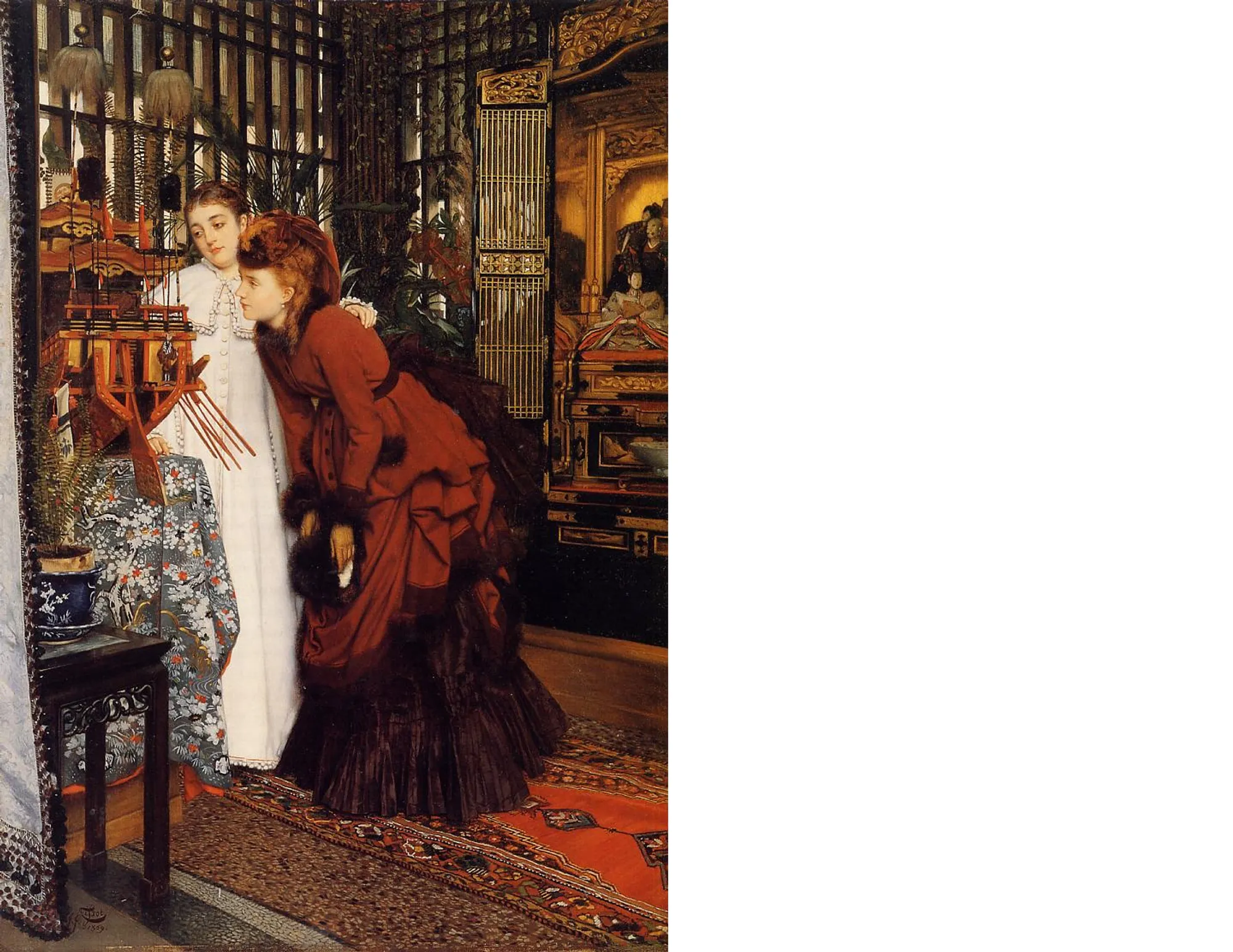
The interior design at Katherine Mansfield House & Garden plays an important role in helping visitors to imagine the home as it may have appeared during Katherine's childhood. Every colour, pattern and furnishing has been carefully considered to evoke the atmosphere of the late Victorian period and bring the house to life. To the modern eye, the bold wallpapers, richly patterned textiles and abundance of decorative objects may seem surprising. We often picture Victorian homes as dark and restrained, but fashionable interiors at the turn of the century were anything but plain. Rather than carefully matching every element, households embraced layers of colour, texture and ornament. What might appear to us as clashing or garish was in fact, a reflection of contemporary taste.
The period the house represents was one of remarkable change. Katherine was born in 1888, as the Victorian era was coming to a close and the 20th century was burgeoning. This transitional moment, often referred to as ‘La Belle Époque’ or ‘The beautiful era’, saw rapid technological, economic and cultural developments. Following the Industrial Revolution, manufactured goods became more widely available, while international trade introduced new materials, furnishings and decorative styles into homes across the British Empire, including here in Aotearoa New Zealand.
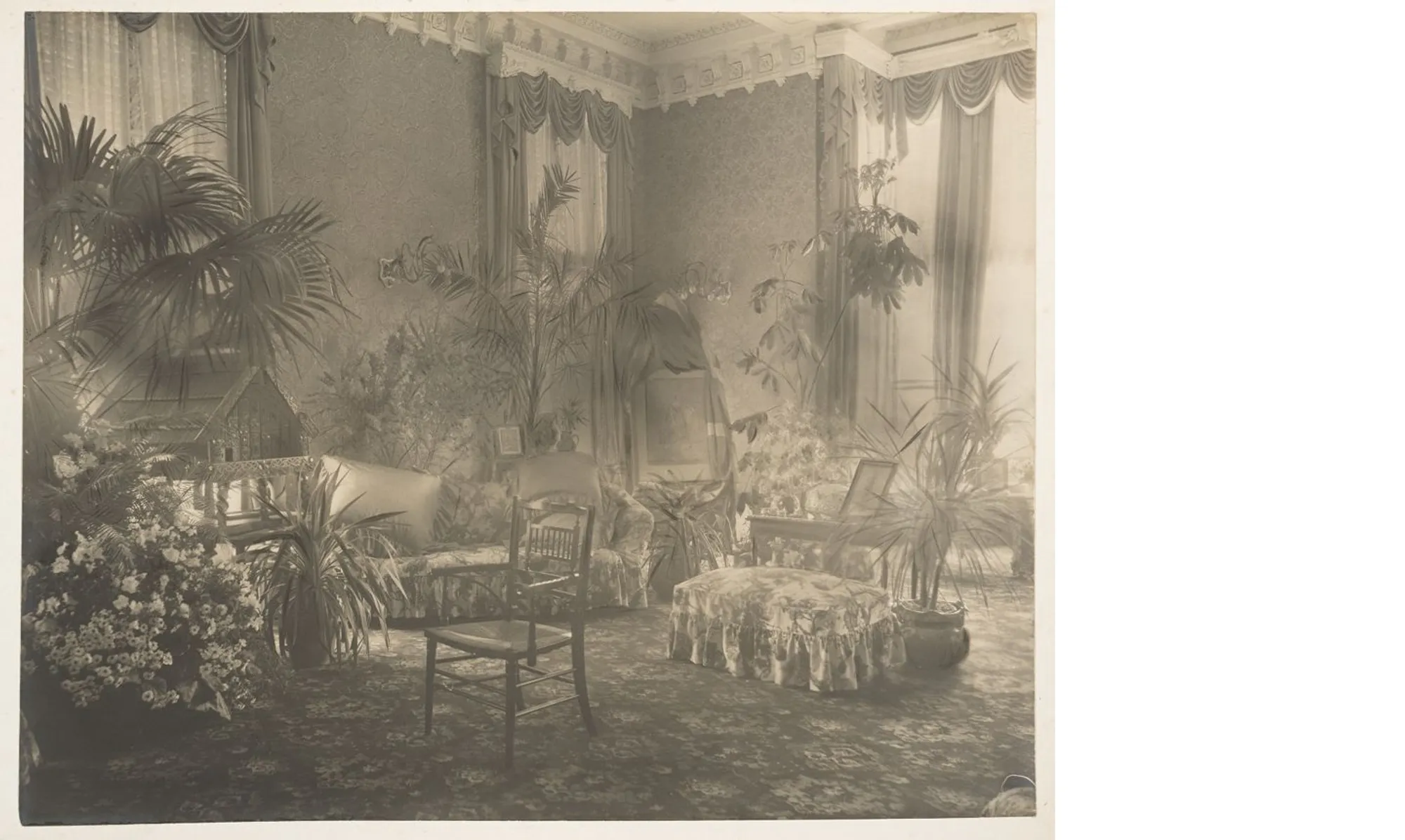
The interiors at Katherine Mansfield House & Garden reflect overlapping design movements that were popular during the late nineteenth century. While the house retains many traditional Victorian features, its decoration also draws on the ideals of the Aesthetic and Arts and Crafts movements, which encouraged people to see the home itself as a work of art. The ethos behind each of these design movements was an importance placed on beauty, craftsmanship and inspiration from the natural world, being valued just as highly as practicality. Recreating the house as accurately as possible was no simple task, when restoration began in the 1980s very little evidence of the original interior survived beyond the structure of the house itself. However during the initial renovation process several important clues were uncovered, the original balustrade, fragments of wallpapers, as well as glass and porcelain household objects recovered during archaeological excavations. These discoveries, combined with extensive research into late Victorian domestic interiors helped in creating spaces that closely reflect the taste of the Beauchamp family's time here. The house underwent another renovation more recently in 2019 under the guidance of Dr William Cottrell, whose research helped ensure that the interiors are both historically informed and evocative of the world in which Katherine Mansfield spent her early years.
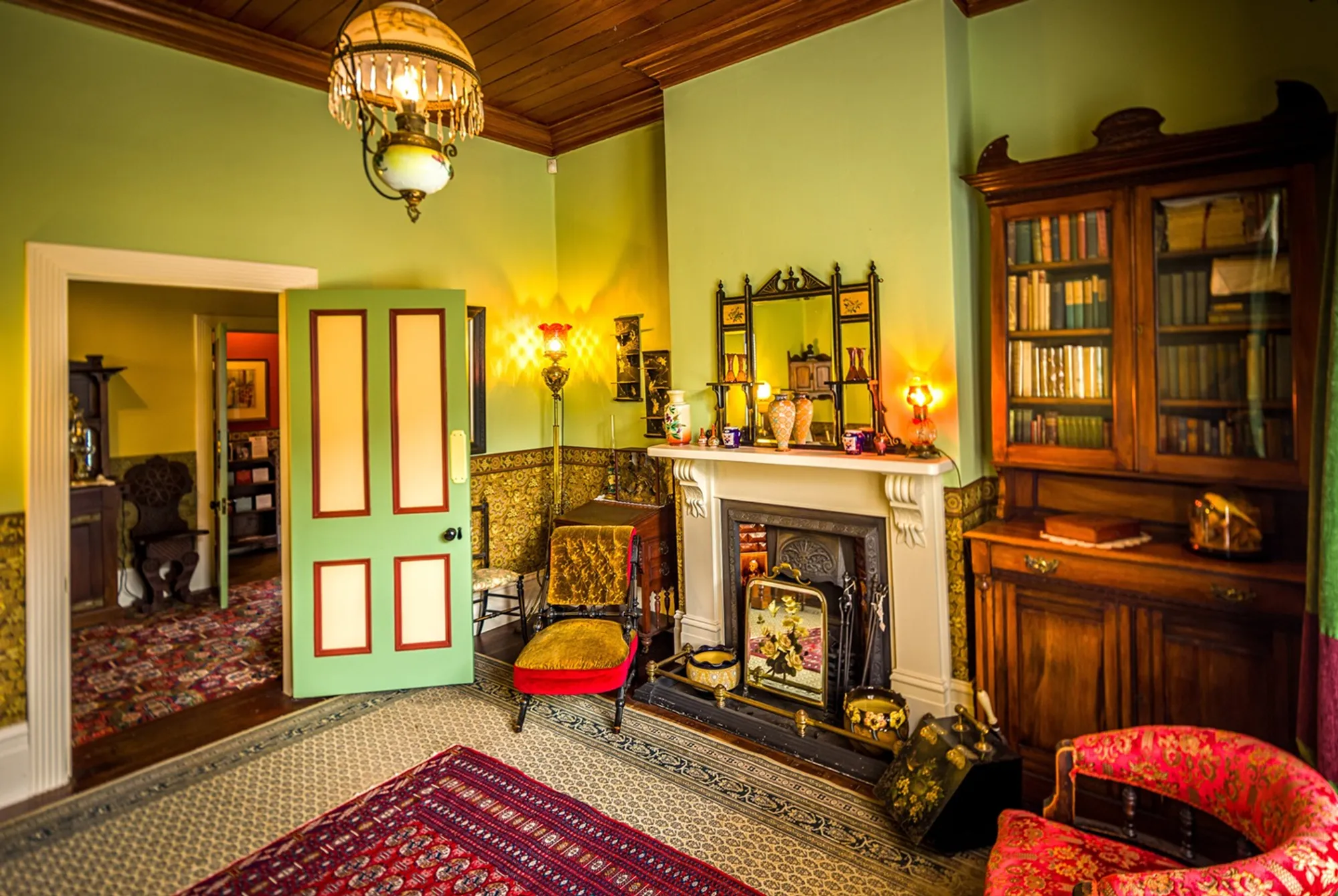
One of the most distinctive influences on the house is the European fascination with the art and design from across Asia that boomed throughout the nineteenth century. Styles inspired by Japanese or Chinese aesthetics in particular, known in France as ‘Japonisme’ and ‘Chinoiserie’ respectively, or more broadly as ‘orientalism’, these decorative styles emerged after Japan reopened its borders to international trade in 1858. Western artists and designers embraced Japanese ideas about asymmetry, flowing natural forms, and the careful balance of space, while households filled their interiors with blue and white porcelain, folding screens, bamboo furniture, fans, ceramics and other imported or inspired objects. These influences helped pave the way for the emerging Art Nouveau style, with its graceful curves and botanical motifs inspired by both nature and new scientific discoveries. These international fashions can be seen throughout the Katherine Mansfield House & Garden.
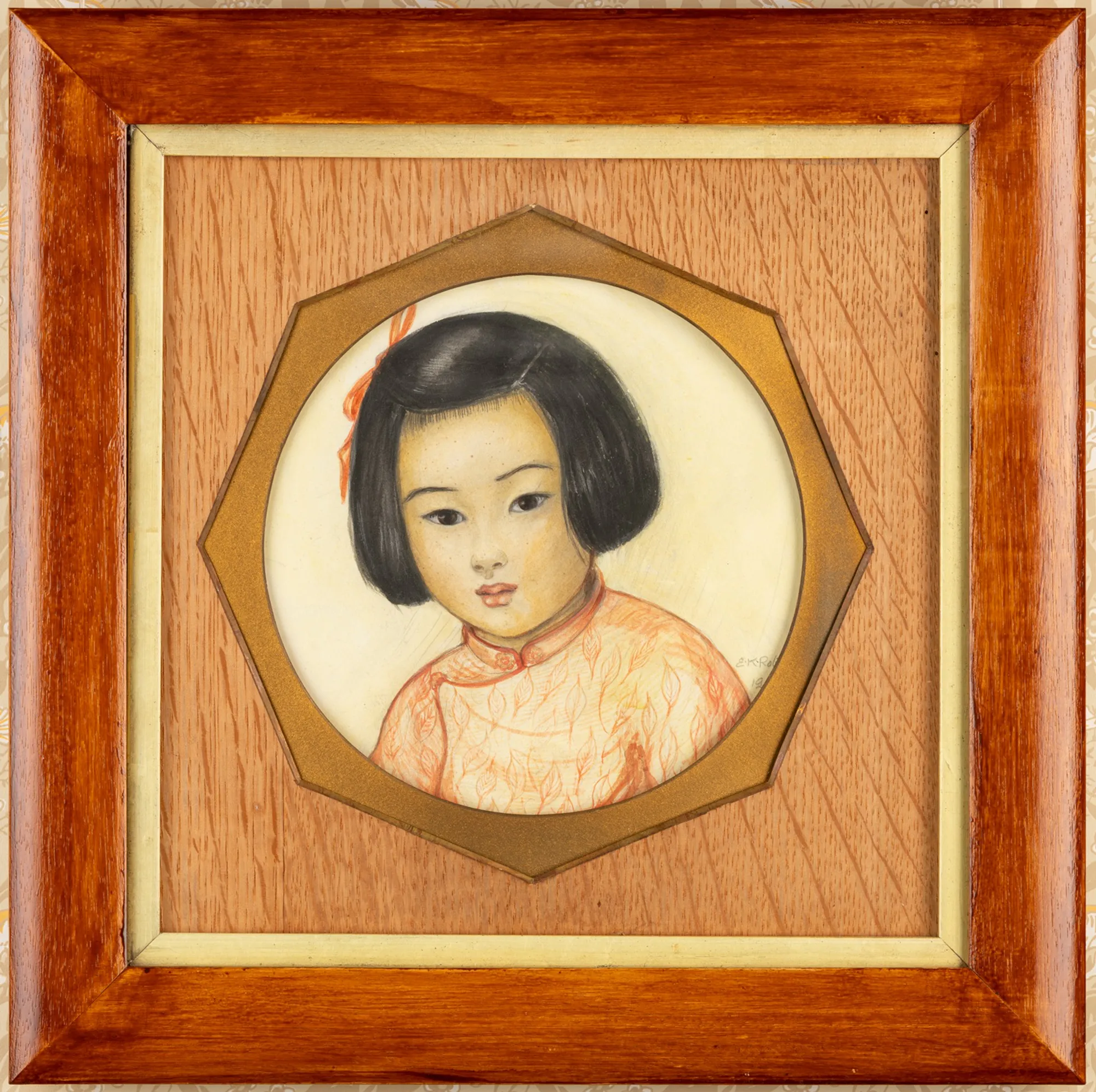
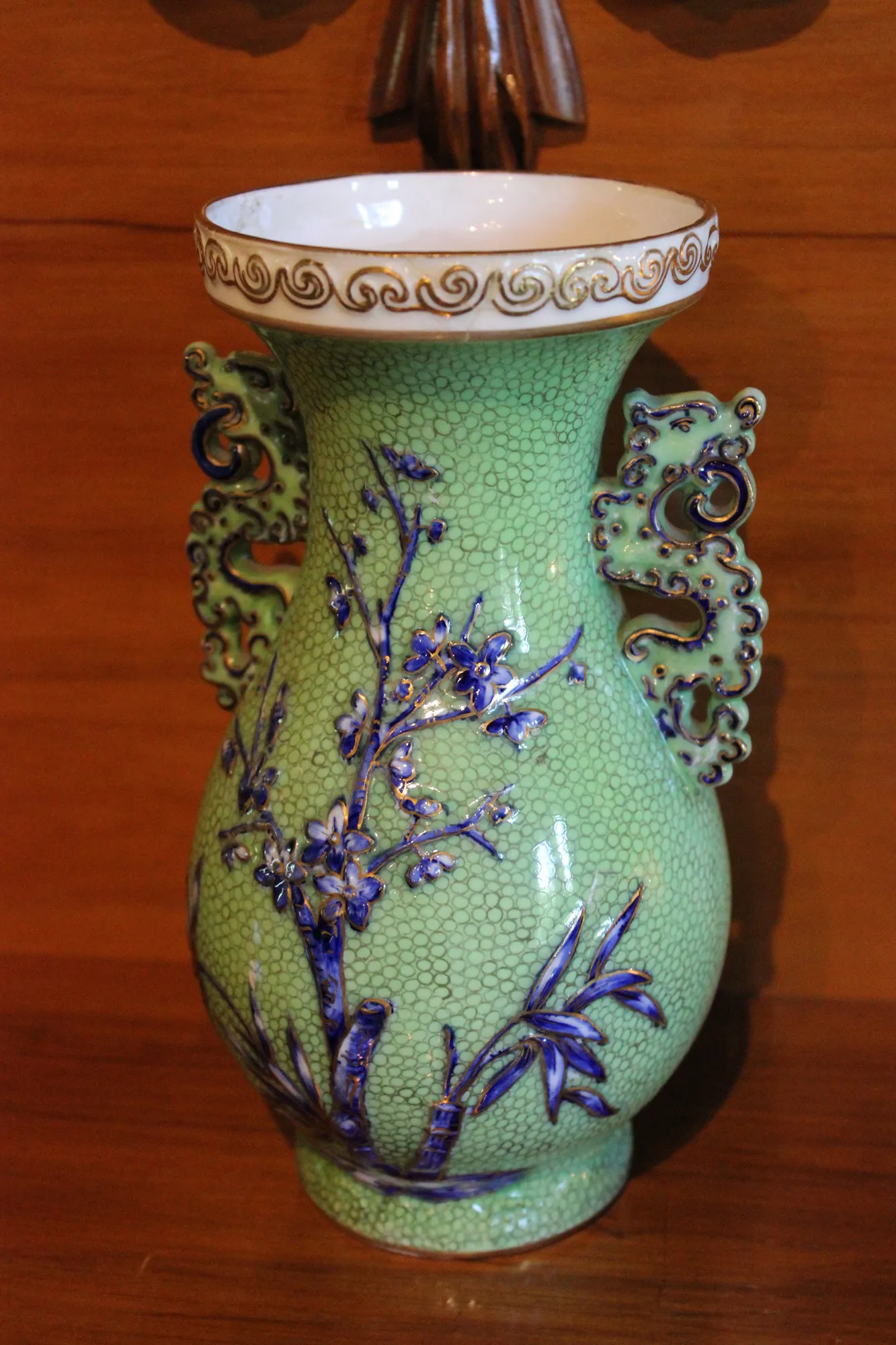
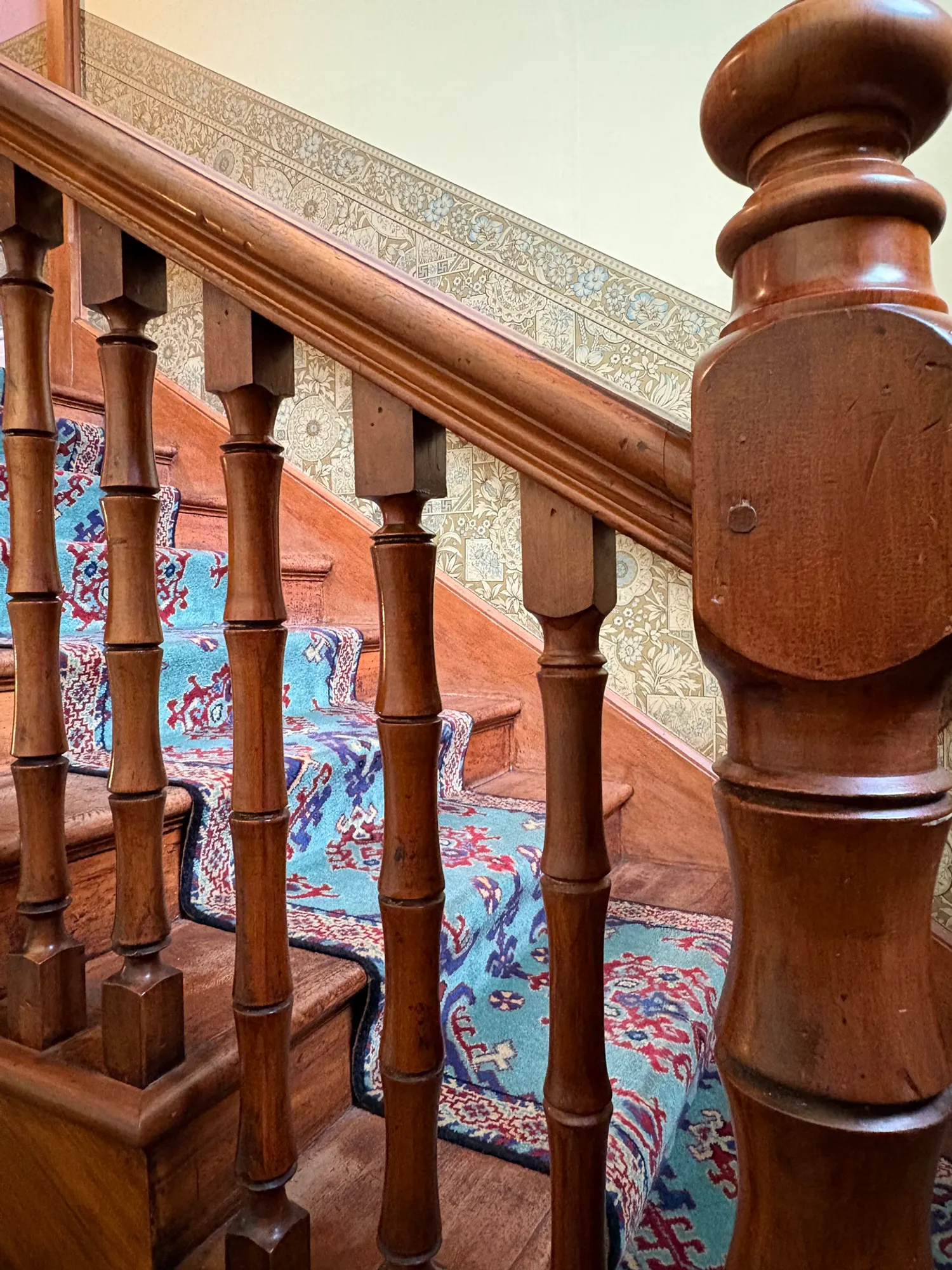
A few of my personal favorite pieces in the house that exemplify this style include a darling watercolour painting of a young Chinese girl wearing a pink cheongsam by Edith Robison (née Bendall), which can be found above one of the beds in the Children's Room. A small, pale green ceramic urn with blue floral motifs, dragon shaped handles and golden embossed details that currently sits atop a sideboard in the Dining Room. And, of course, the wonderful original rimu balusters, turned to look like bamboo. For aspiring prosperous families such as the Beauchamps, these carefully chosen furnishings did more than decorate a room, they reflected education, worldliness and participation in the latest international fashions.
References:
For image references, click on the images.
‘Home décor and furnishings’, Nancy Swarbrick, Te Ara: The Encylopedia of New Zealand.
Irvine, Gregory, ed. (2013). Japonisme and the Rise of the Modern Art Movement: The Arts of the Meiji Period: The Khalili Collection. New York: Thames & Hudson.