
KATHERINE MANSFIELD AND OLD ST PAUL'S
- 5 June 2026
Old St Paul’s celebrates its 160th anniversary on 6 June 2026. To mark the occasion, Katherine Mansfield House & Garden Director Cherie Jacobson looks at the connection between Katherine Mansfield and this very special Wellington building. This blog post is adapted from a talk given at the Friends of Old St Paul’s 2026 AGM.
It could be argued that without Old St Paul’s, Katherine Mansfield would never have been born.
Why? Because on the 18th of February 1884, Katherine’s parents Harold Beauchamp and Annie Burnell Dyer were married at what was then known as St Paul’s Pro-Cathedral by the Venerable Archdeacon Richard Thorpe. You can read the marriage announcement here. They went on to have six children, the third of which was Kathleen Mansfield Beauchamp, later known as Katherine Mansfield.
Both Harold and Annie had been born in Australia and arrived in New Zealand as children. Annie was a few months off turning twenty when they married, while Harold was six years older. Harold was working as a clerk for Bannatyne and Company, an importer of “general merchandise of all descriptions from the principal markets of the world”. [1] He worked his way up to become a partner in the firm in 1889, the year after his family moved to what is now Katherine Mansfield House & Garden.
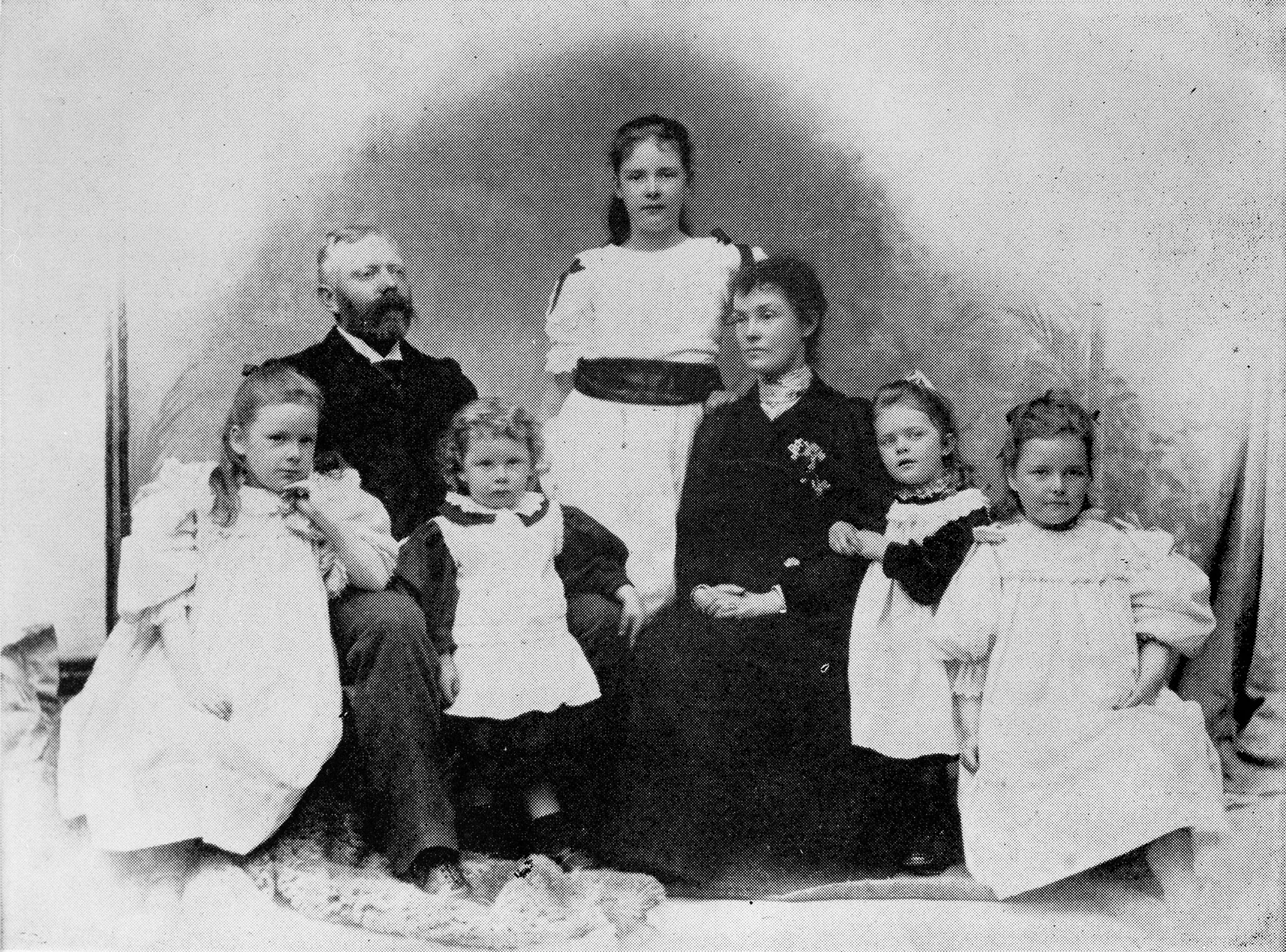
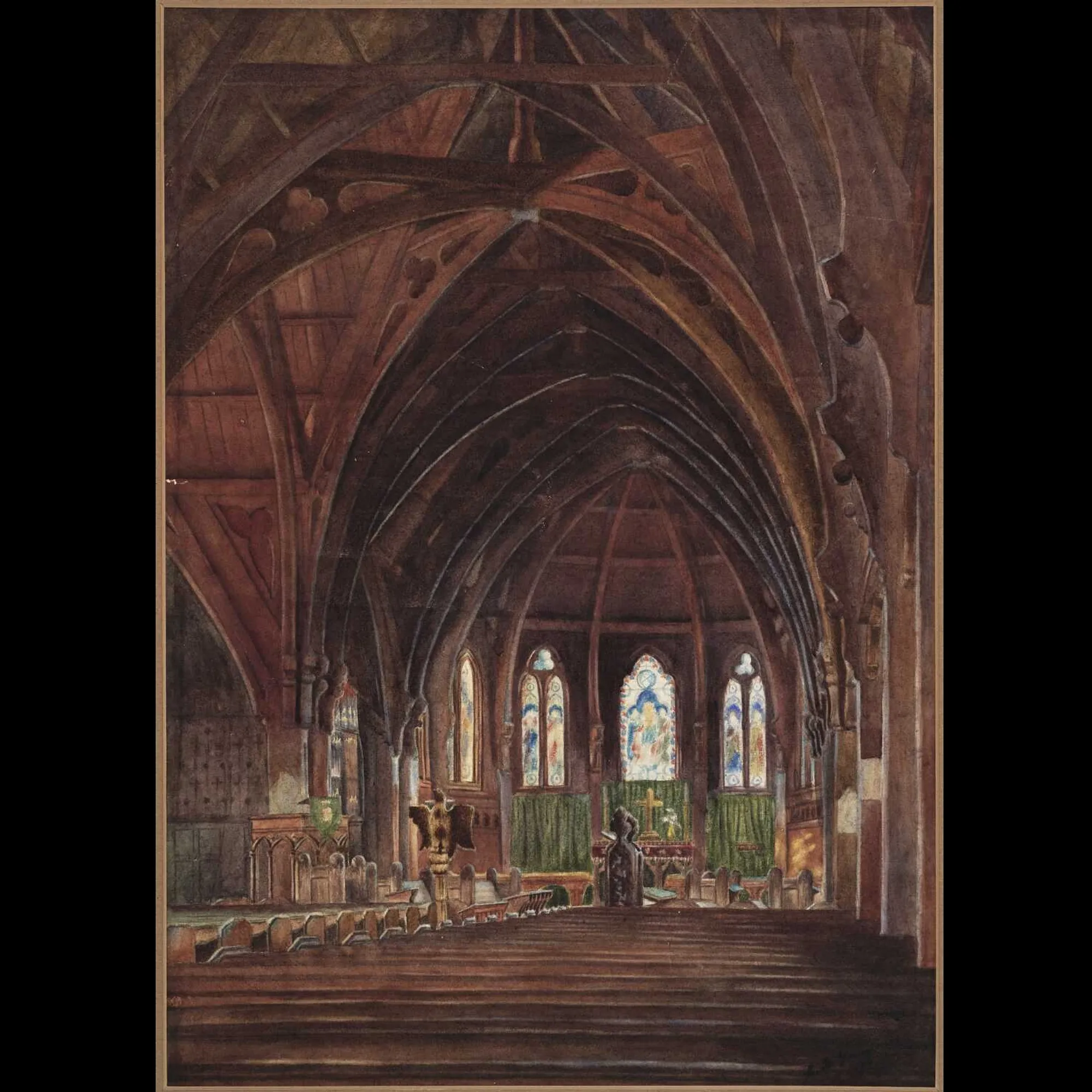
St Paul’s was the Beauchamp family’s church. They rented a pew and would have attended regularly while living in Thorndon. The family moved to Karori in 1893 but returned in 1898, after Katherine had begun attending Wellington Girls’ High School (now Wellington Girls’ College).
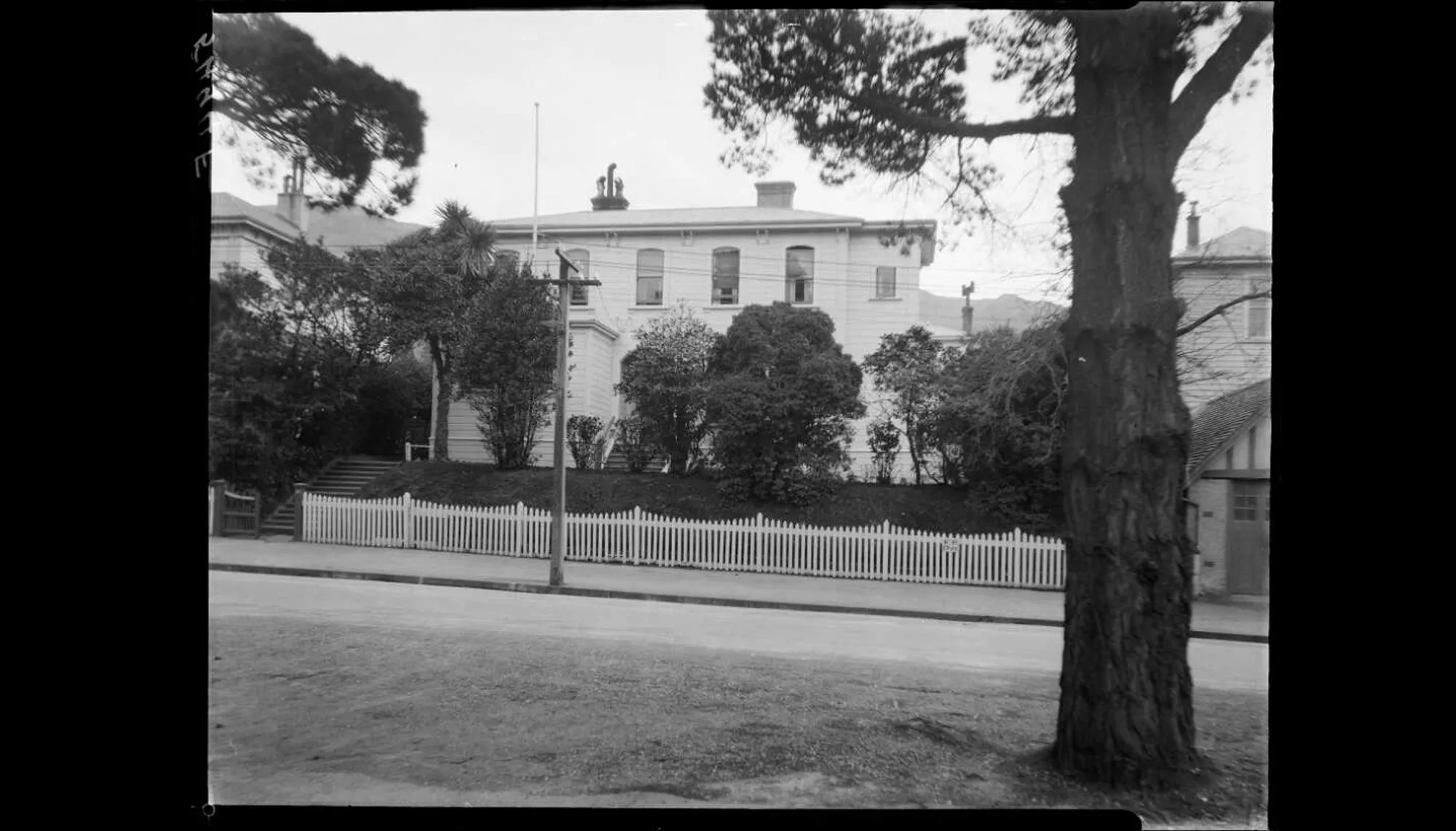
In June 1900 Katherine and her sisters left Wellington Girls’ High School and began attending Mary Anne Swainson’s private Fitzherbert Terrace School. The school had a close connection with St Paul’s. As Rebecca Nuttall explains in this blog post about Mrs Swainson’s school, “The school was just a five-minute walk to St Paul’s, and church attendance, instruction, preparation for confirmation and religious ceremonies were all an important part of attending.” [2]
Mary Anne Swainson died in 1897 and the following year a stained-glass window, ‘Christ Blessing the Children’, was installed at St Paul's in her memory. St Paul’s was also gifted a litany desk in her memory, carved by Hariette Crawford. By the time Katherine started at the school, Mary Anne’s daughter, Mary, had taken over as headmistress. The school was later sold to the Diocese of Wellington and renamed Samuel Marsden Collegiate School, moving to Karori where it remains today. Katherine Mansfield House & Garden has an ongoing link with Samuel Marsden Collegiate School as they generously host our annual Talking Books fundraising event.
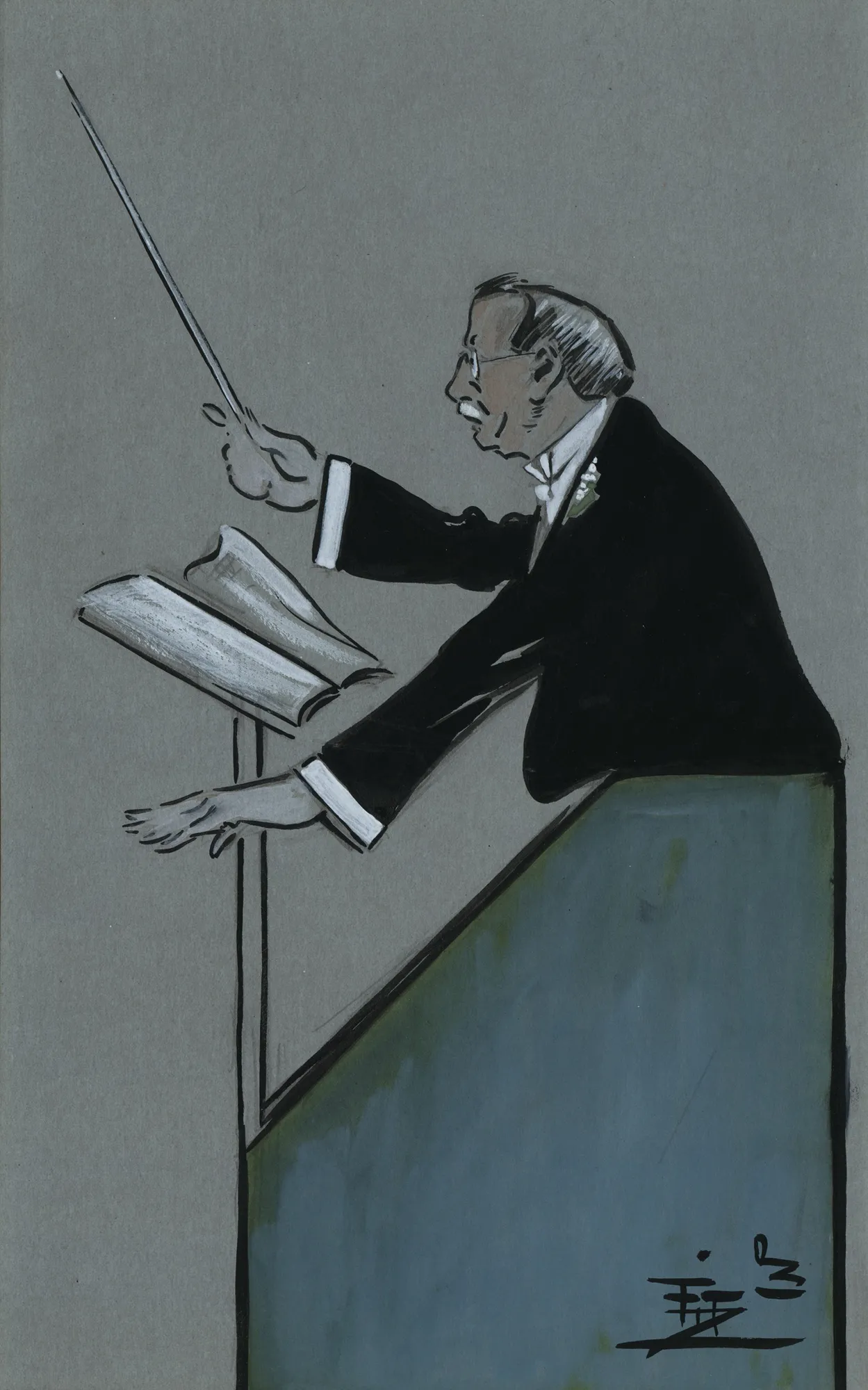
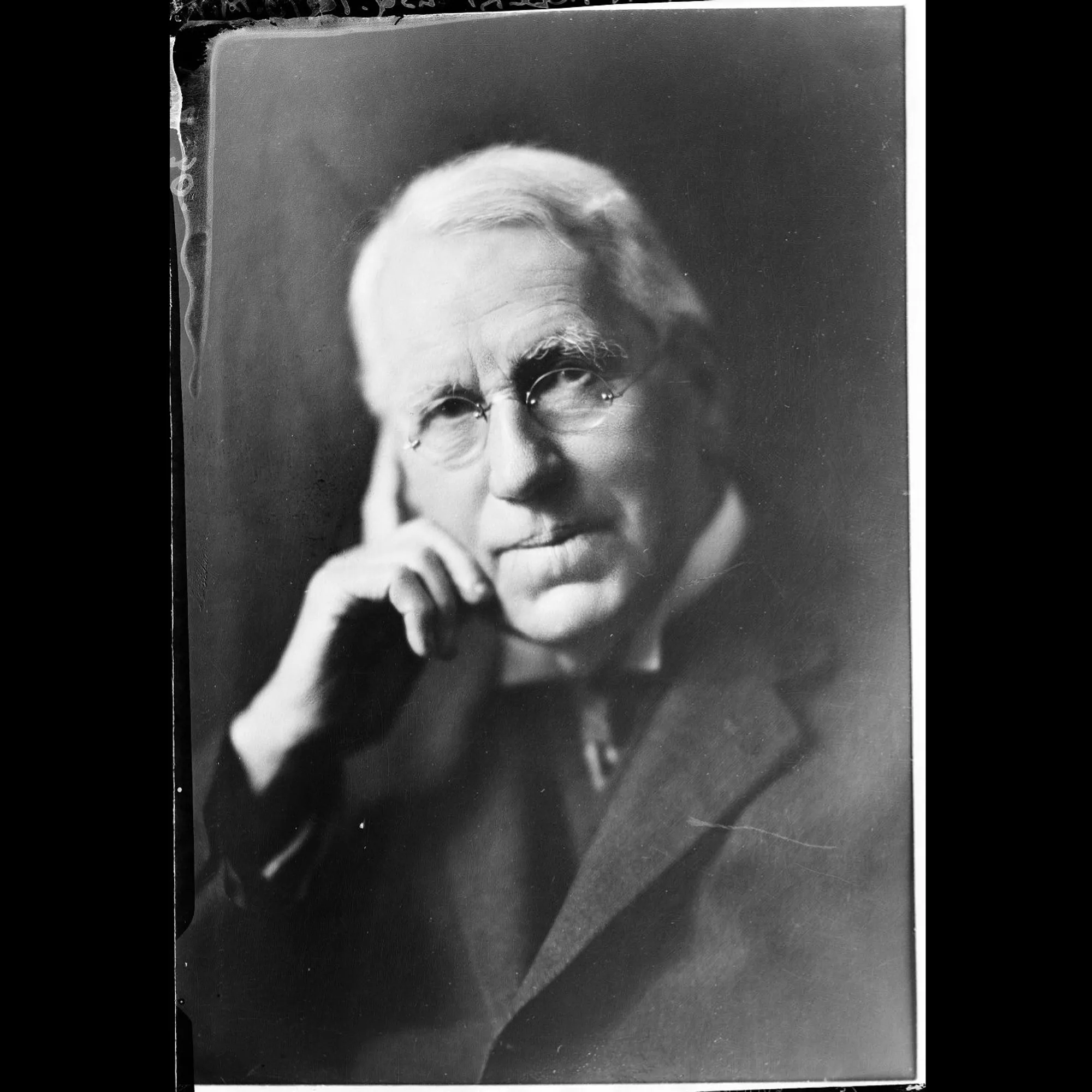
Another link to St Paul’s for Katherine was organist and choir master Robert Parker, who is remembered with a plaque on the church’s wall. He gave music lessons to the students at Fitzherbert Terrace School and was Katherine’s piano teacher; he would also have taught her older sisters Vera and Charlotte, who attended the school too.
Parker inspired the character of the piano teacher Robert Bullen in Katherine’s story ‘The Wind Blows’:
Mr. Bullen’s drawing-room is as quiet as a cave. The windows are closed, the blinds half-pulled, and she is not late. The-girl-before-her has just started playing MacDowell’s ‘To an Iceberg.’ Mr. Bullen looks over at her and half smiles.
“Sit down,” he says. “Sit over there in the sofa corner, little lady.”
How funny he is. He doesn’t exactly laugh at you … but there is just something … Oh, how peaceful it is here. She likes this room. It smells of art serge and stale smoke and chrysanthemums … there is a big vase of them on the mantelpiece behind the pale photograph of Rubinstein … à mon ami Robert Bullen … Over the black glittering piano hangs ‘Solitude’ – a dark tragic woman draped in white, sitting on a rock, her knees crossed, her chin on her hands.
In an early biography of Katherine by Ruth Mantz and John Middleton Murry, Parker remembers Katherine, saying, "I can see her sitting there at the piano…her very attitude. It is remarkable how she noticed details at her age. The pale picture of Rubinstein (there it is) did hang above the mantelpiece, though there was no inscription; and the picture of ‘Solitude’ was over the piano. She has the room down exactly in that—what shall I call it?—that very sentimental little piece about me.” [3]

Katherine’s uncle, Frederick Valentine Waters, who was married to her mother’s sister, was a very active baritone singer and knew Parker well. Parker conducted him in the Wellington Liedertafel (male voice choir) and other performances and festivals. Parker featured in our 2021 exhibition Mansfield & Music.
Parker also conducted Katherine and her sisters in public concerts. There was a newspaper advertisement in the Evening Post on 4 May 1907 for a St Paul’s Choir Concert “under the direction of Mr Robert Parker” the following week at the Sydney Street Schoolroom [4]. This was only a few months after Mansfield returned from finishing her education at Queen’s College in London.
On the programme for the concert are: "Glees by the choir; Old English songs by the choristers; Pianoforte and violoncello solos by Miss Beauchamp [Katherine’s eldest sister Vera], Miss Gertrude Martin, and Miss K Beauchamp [Katherine]; Songs and duets by Miss C Beauchamp [Katherine's second-eldest sister Charlotte], Mrs Mitchell, Mssrs Clarkson, Scarle and Warren. Admission 1 shilling."
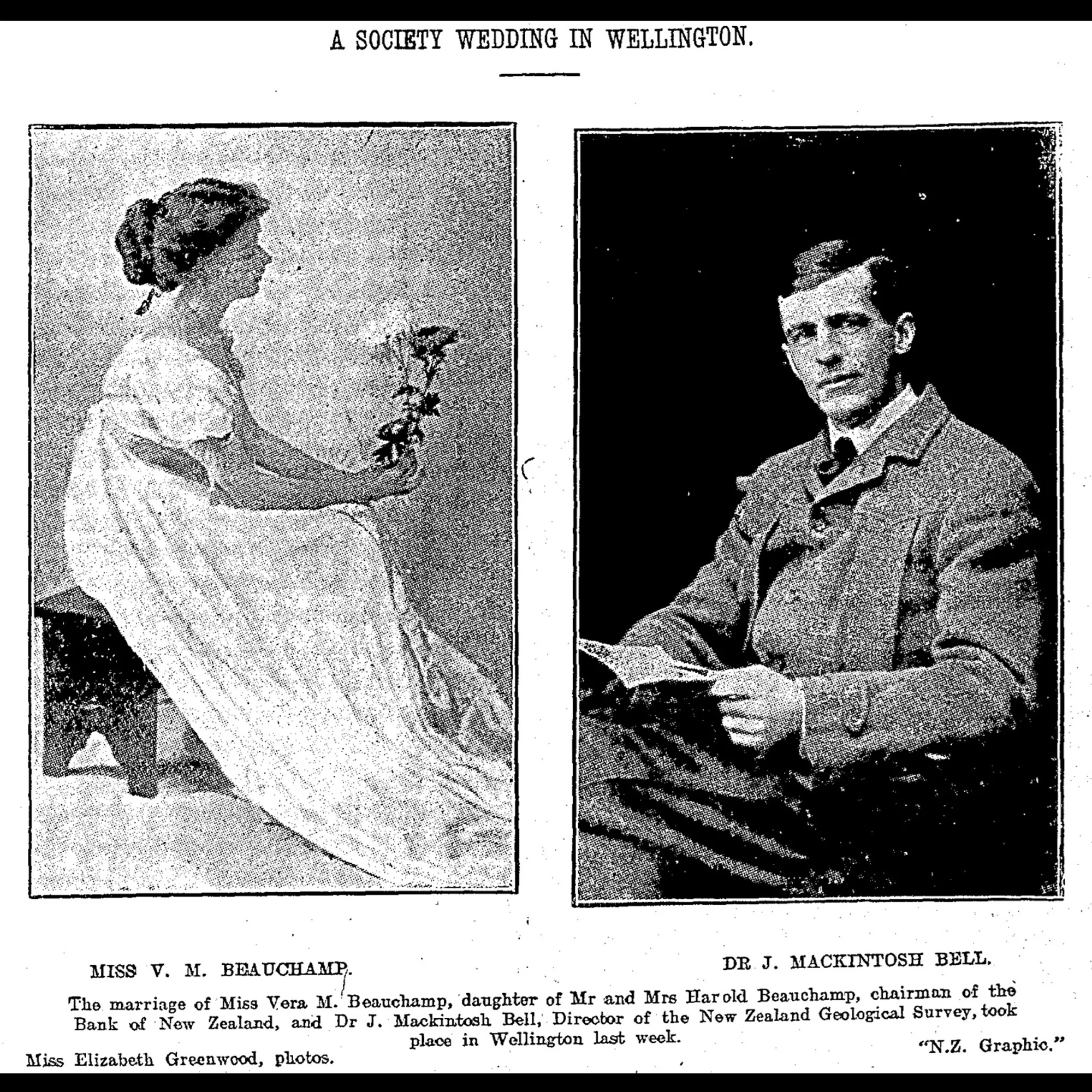
A little over a year after that concert, Katherine returned to London permanently. This meant she missed her eldest sister Vera’s wedding at St Paul’s on 23 September 1909. Vera married Canadian geologist James Mackintosh Bell and the couple later moved to Canada permanently.
By the time Vera married, Harold Beauchamp was a well-known and respected Wellington figure. He had been a member of the Harbour Board since 1895, including Chair for three years, and was Chair of the Bank of New Zealand.
A report of the wedding in The Press the next day read: “Most of the vessels in port were dressed in bunting today, this being the date of the wedding of Miss Vera Beauchamp, eldest daughter of Mr Harold Beauchamp, representative of the Tyler line and other shipping companies, to Dr. J. M. Bell, Director of the Geological Survey of New Zealand, and son of Mr Andrew Bell, of Canada. The wedding service was fully choral, and the Bishop of Wellington performed the ceremony. The pro-Cathedral was beautifully decorated with palms, lilies, and spring flowers. Mr Lawrence Earle, of England, was best man, and four ushers, American fashion, attended the bridegroom, and led out the four bridesmaids. A very large number of guests attended the wedding and the reception afterwards.” [5]
There was an even longer report in the social gossip column of that weekend’s national Free Lance with details of the dresses and the reception at the Beauchamp family home on Fitzherbert Terrace. Another lengthy report in Napier’s Daily Telegraph noted that “numerous spectators...unable to gain admission, pack[ed] the approaches in order to obtain a glimpse of the bridal party.” It went on to say that “The service was fully choral, Mr Robert Parker being at the organ. As the bride and party swept up the aisle, the hymn, ‘The King of Love my Shepherd Is’ was sung by a choir, consisting of the bride’s girlfriends and a number of boy choristers — the latter robed in scarlet cassocks and snowy surplices.” [6]
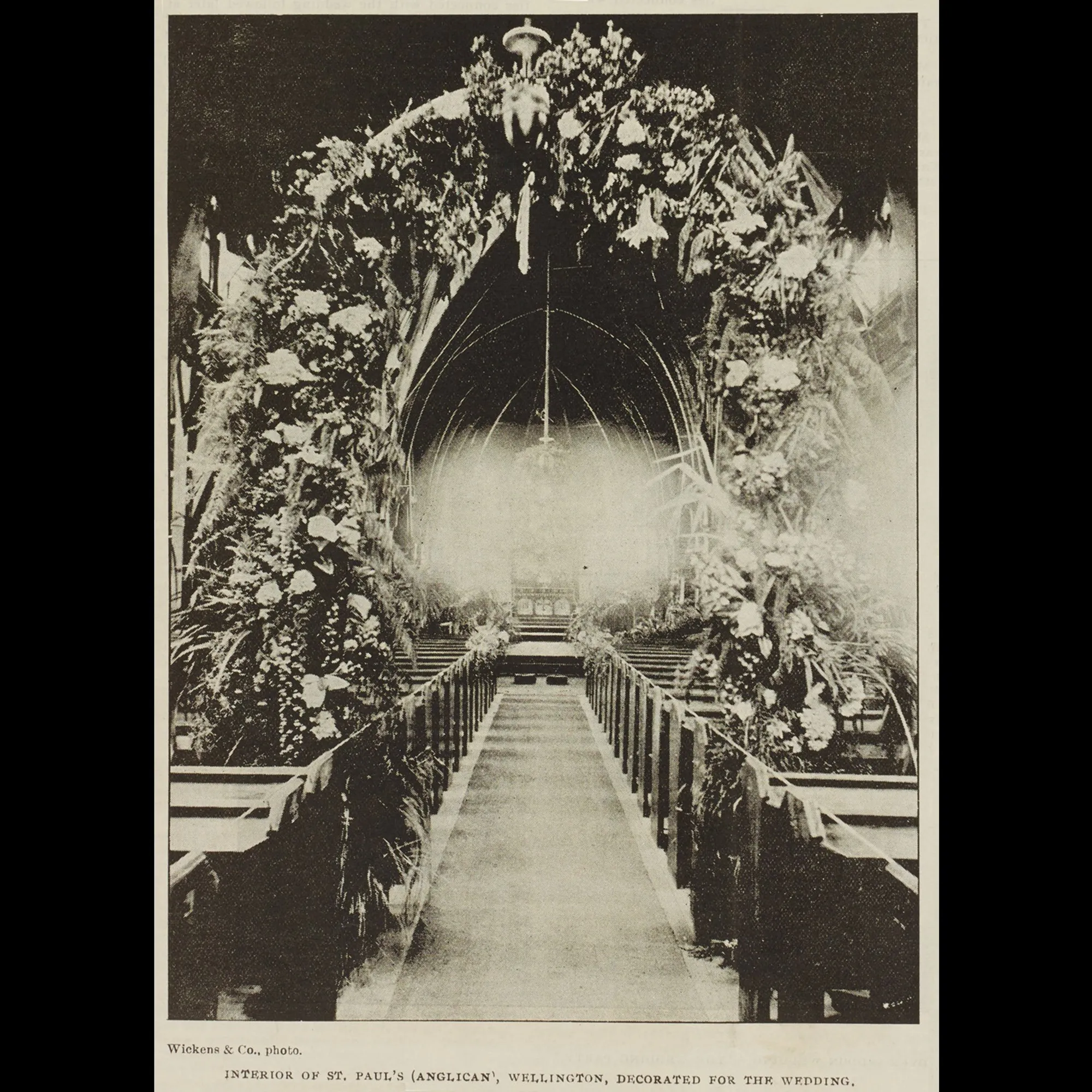
Sadly we don’t have any photos from Vera’s wedding but above is a photo of St Paul’s decorated ten years’ earlier for the wedding of Katherine’s maternal uncle Frank Dyer to Phoebe Seddon, daughter of then-Premier Richard Seddon.
As you might well expect, St Paul’s hosted the funeral service for the by-then Sir Harold Beauchamp who died on 5 October 1938, aged 79. His wife Annie had died in 1918 and had a private internment, likely at the Karori Cemetery Chapel where the ashes of both Annie and Harold are interred. A photo in the Dominion on 7 October 1938 shows "the head of the long cortege on its way to Karori Cemetery" after Harold's funeral, which was "attended by a large and widely representative gathering".
As the site of many important family events, as well as regularly attended church services, it is clear that Katherine and her family had a strong connection to St Paul’s. There is perhaps no greater evidence of this than a letter written by Katherine to her father on 31 December 1922 from the Institute for the Harmonious Development of Man in Avon, France:
“My dearest father
I am writing this letter when the old year is at his last gasp and in the very act of turning up its toes! May the New Year be full of happiness for you. I wish I could imagine that we might meet in it, but perhaps in the one after I shall be fortunate enough to turn towards home…It is a dream I would love to realise…
Christmas… is no fun away from one’s own people. I seldom want to make merry with strangers, and that particular feast is full of childish associations. I remember us all going to St Paul's and Mother’s enjoyment of ‘Hark the Herald Angels Sing’. And that makes me think of darling Leslie still a child, enjoying everything. Such memories do not make for gaiety.”
Harold did not receive this letter until after Katherine died on 9 January 1923. It shows St Paul’s was in Katherine’s thoughts in the very last days before her death aged 34 from tuberculosis.
Last year I visited Avon and its neighbouring town, Fontainebleau, where Katherine spent the final months of her life.
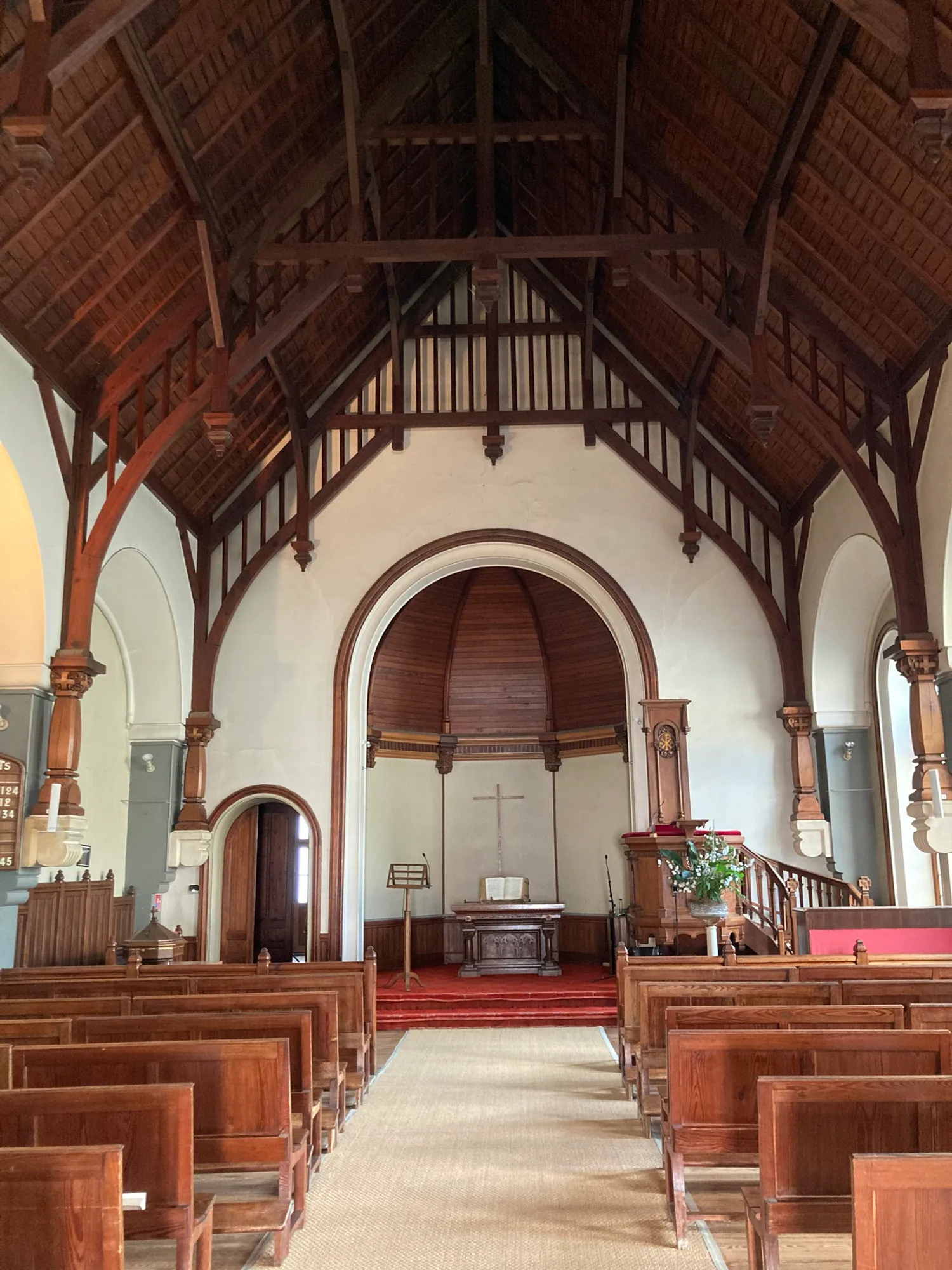
One of the sites I visited was the Protestant church in Fontainebleau, in which Katherine’s funeral was held. As soon as I walked in, I noticed its wooden ceiling, which was so different to the many stone churches and cathedrals I’d visited elsewhere in France. It reminded me of Old St Paul’s and, as such, felt like a very appropriate place for Katherine’s final farewell.
References
[1] ‘Bannatyne, W. M., and Co’, The Cyclopedia of New Zealand, 1897, p.708.
[2] Nuttall, Rebecca, ‘Mrs Swainson’s School’, 28 June 2015, Old St Paul’s Wellington.
[3] Mantz, Ruth and Middleton Murry, John, The Life of Katherine Mansfield, 1933, p.154.
[4] ‘Advertisements’, Evening Post, 4 May 1907, p.6.
[5] ‘Personal Items’, Press, 24 September 1909, p.7.
[6] ‘Woman’s Realm’, Daily Telegraph, 27 September 1909, p.2.